Species Focus Area

Freshwater Species

Freshwater habitats hold a remarkable share of biodiversity in a very small share of the earth's water, and they are easily disrupted.

Why this group matters

Springs, creeks, and small rivers concentrate endemic species found nowhere else. A single spring going dry can end a species outright.

Common threats

  • · Groundwater pumping and spring flow loss
  • · Sedimentation and channelization
  • · Drought and water withdrawal
  • · Contaminants and invasive species

How people can help

  • · Conserve water in spring-fed watersheds
  • · Protect creek banks and native buffers
  • · Report water quality concerns to state agencies

Ten Freshwater Species of Exceptional Conservation Concern

These ten are not a scientific ranking. They were selected for conservation urgency, teaching value, and regional relevance, and each one has a complete, sourced profile.

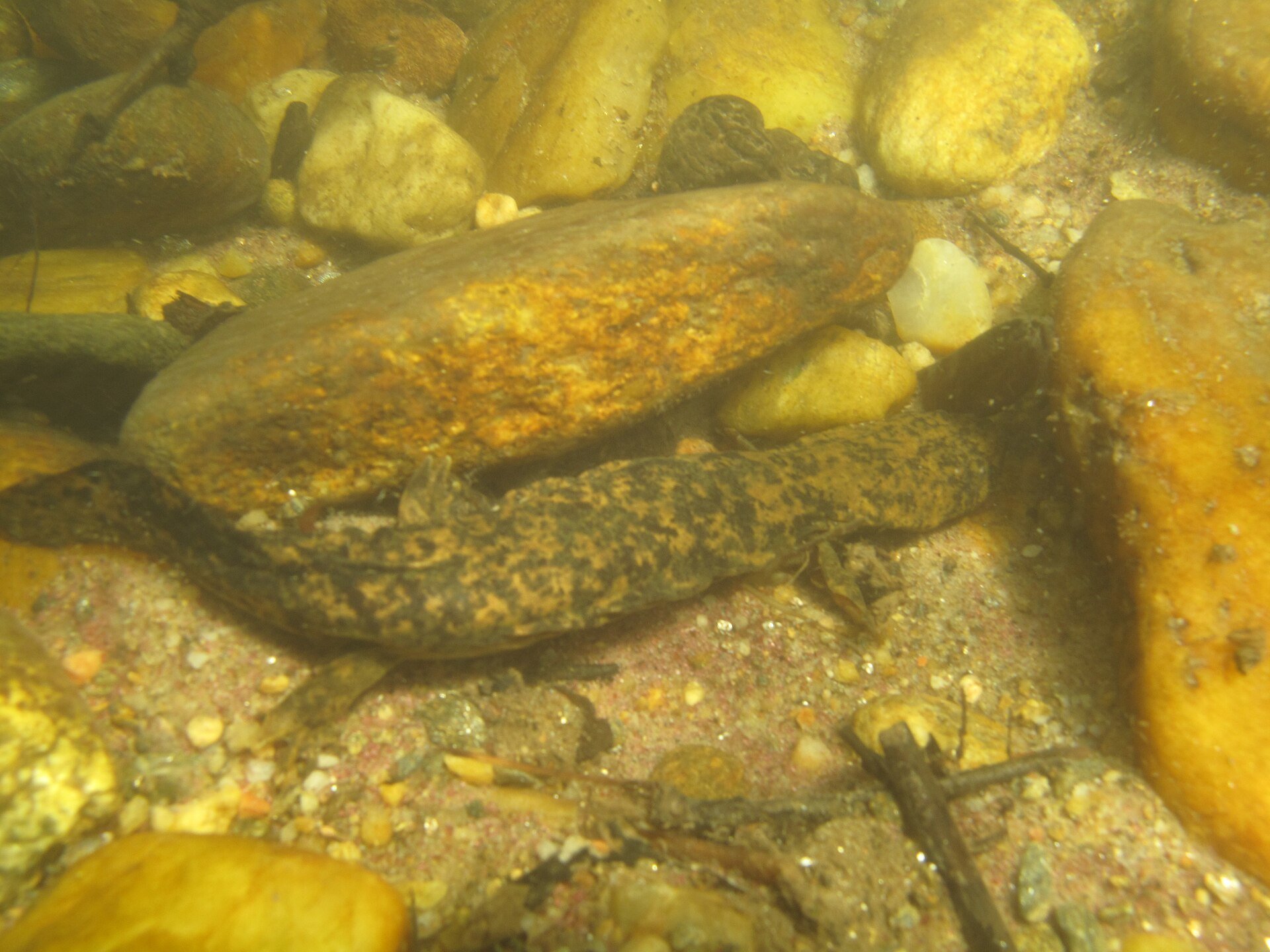
An eastern hellbender lying among stream cobbles underwater, showing its flattened body and wrinkled skin.

Vulnerable (IUCN); ESA listing proposed for the eastern subspecies

Eastern Hellbender

Cryptobranchus alleganiensis alleganiensis

North America's largest salamander, breathing through its skin in fast, clean streams and disappearing as those streams fill with silt.

Region:
Appalachian and Ozark streams
Principal threat:
Sedimentation and degradation of stream habitat
View full profile →
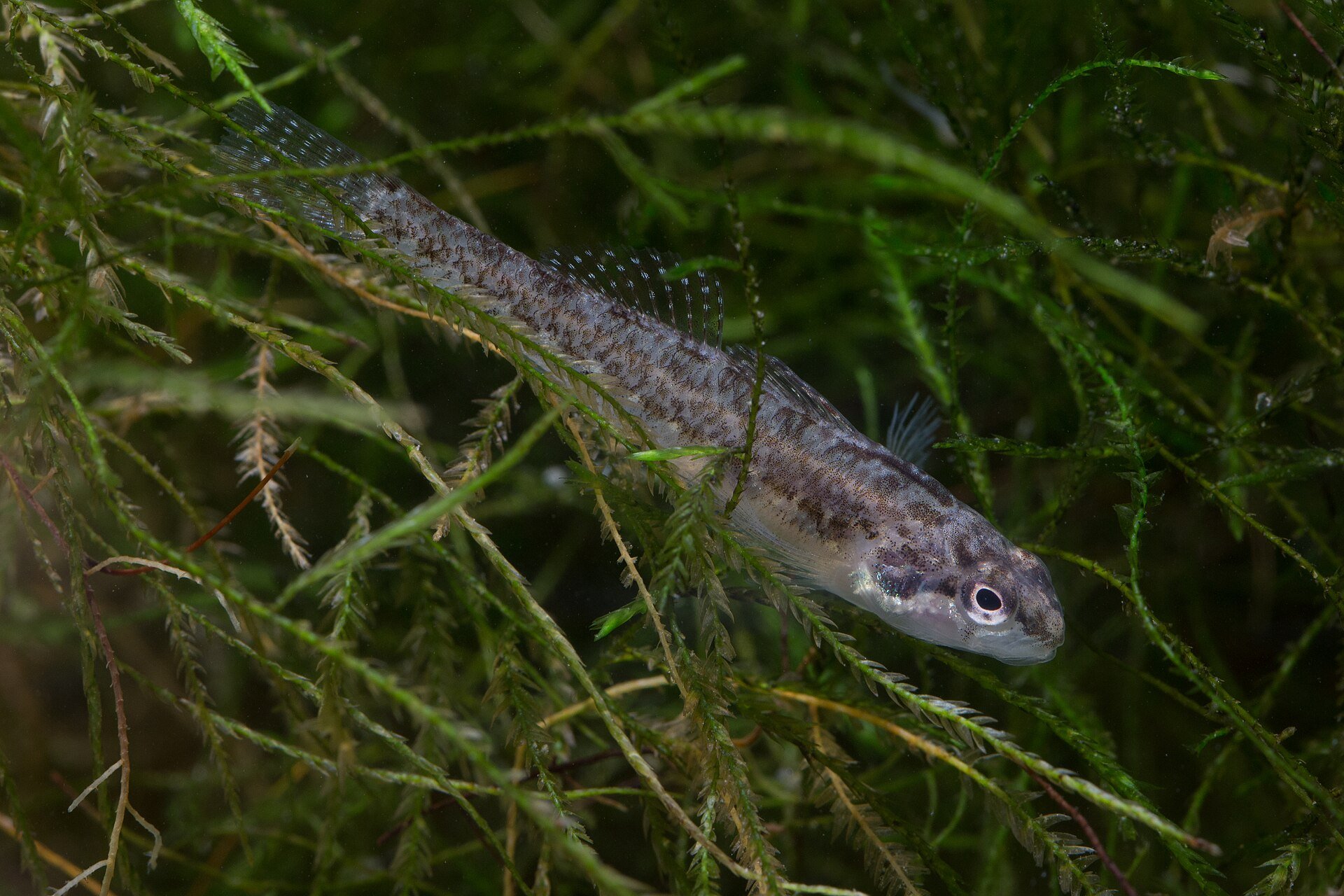
A small speckled fountain darter resting among aquatic plants.

Vulnerable (IUCN) / Endangered (ESA)

Fountain Darter

Etheostoma fonticola

A thumb-sized fish living only in the Comal and San Marcos spring systems of central Texas, dependent on constant spring flow.

Region:
Comal and San Marcos springs, Texas
Principal threat:
Loss of spring flow from aquifer pumping and drought
View full profile →
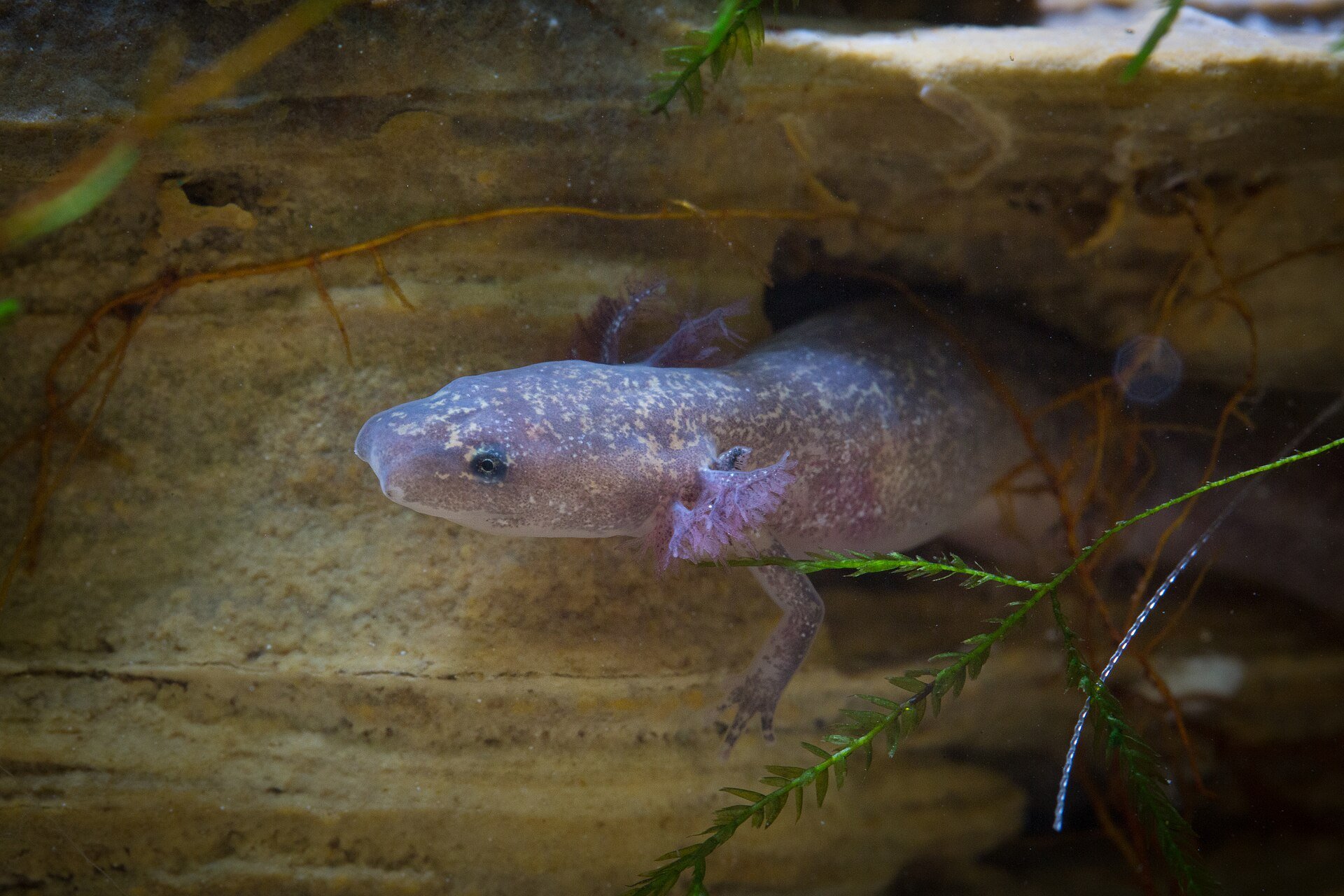
A pale Barton Springs salamander underwater on limestone, showing its external gills.

Vulnerable (IUCN) / Endangered (ESA)

Barton Springs Salamander

Eurycea sosorum

A gilled salamander that lives only in the spring outlets at Barton Springs in Austin, Texas, and nowhere else on earth.

Region:
Barton Springs, Austin, Texas
Principal threat:
Urban runoff and reduced spring flow
View full profile →
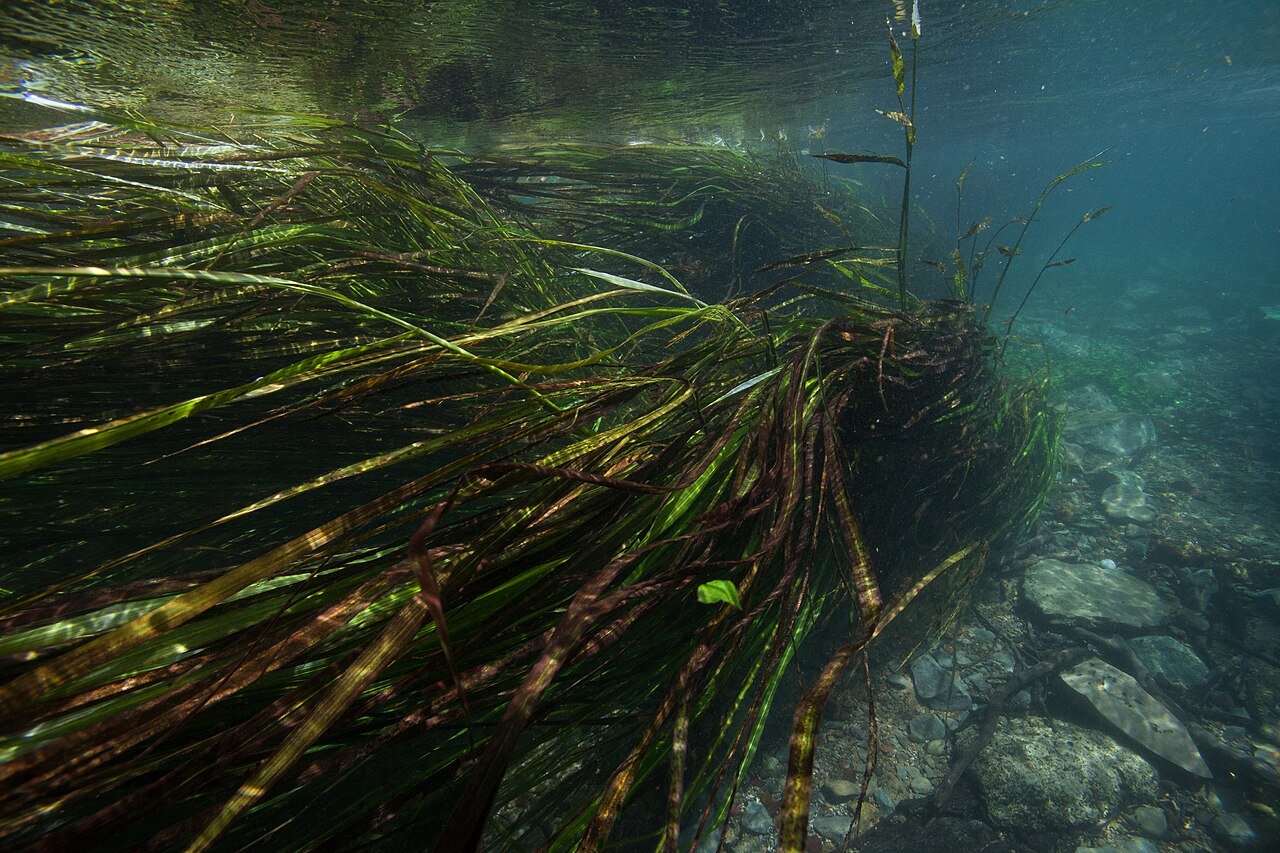
Long green blades of Texas wild rice streaming underwater in a clear spring-fed river.

Critically Endangered (IUCN) / Endangered (ESA)

Texas Wild Rice

Zizania texana

An aquatic grass that grows in the wild in exactly one place on earth: the upper two miles of the San Marcos River in Texas.

Region:
Upper San Marcos River, Texas
Principal threat:
Spring flow loss, recreation damage, and invasive plants
View full profile →
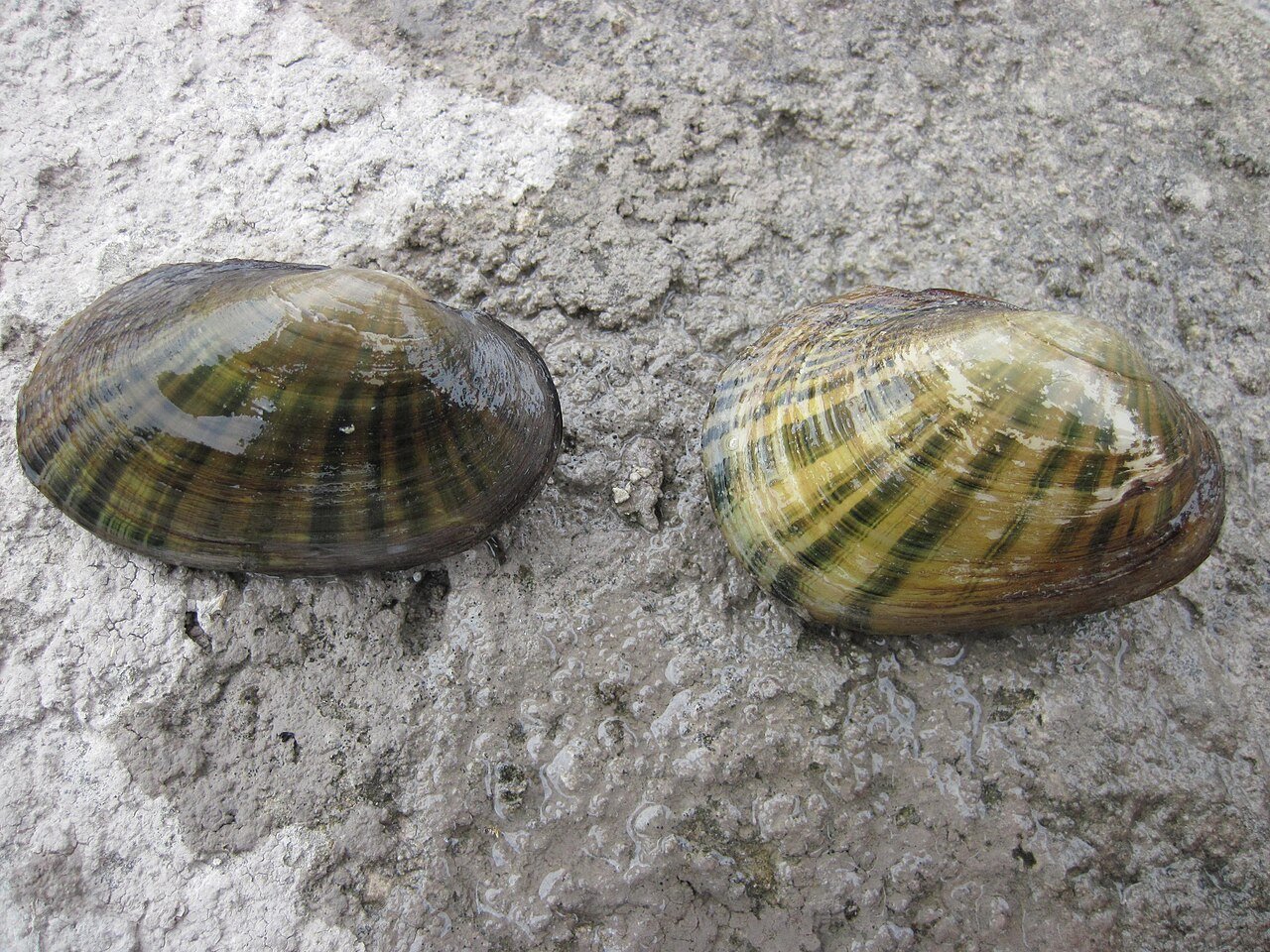
Two Texas fatmucket mussel shells with green and yellow rays lying on wet rock.

Endangered (ESA) / Endangered (Texas)

Texas Fatmucket

Lampsilis bracteata

A freshwater mussel found only in central Texas rivers, filtering water for decades in one spot and dying when the river stops flowing.

Region:
Colorado and Guadalupe river basins, Texas
Principal threat:
Drought, river drying, and sedimentation
View full profile →
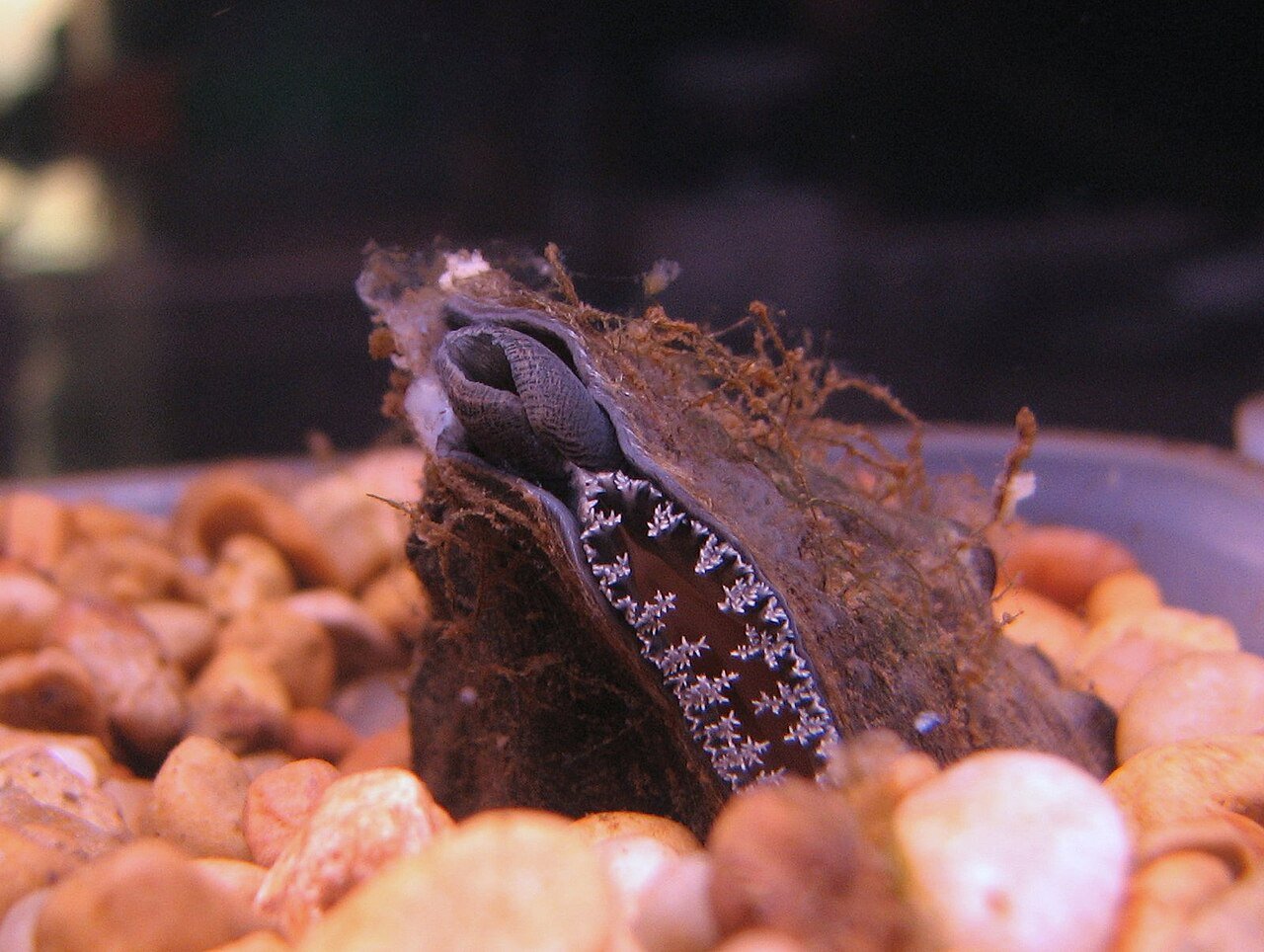
A winged mapleleaf mussel in an aquarium with its fleshy lure extended above orange gravel.

Critically Endangered (IUCN) / Endangered (ESA)

Winged Mapleleaf

Quadrula fragosa

A freshwater mussel once found across a dozen states, now surviving in a handful of river reaches, principally the St. Croix River on the Minnesota-Wisconsin border.

Region:
Upper Mississippi and Red River basins
Principal threat:
River degradation, sedimentation, and invasive zebra mussels
View full profile →
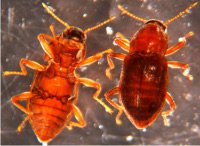
Two small reddish-brown Comal Springs riffle beetles photographed under magnification.

Endangered (ESA)

Comal Springs Riffle Beetle

Heterelmis comalensis

A beetle the size of a grain of rice that lives only where Edwards Aquifer water emerges at two Texas spring systems.

Region:
Comal and San Marcos springs, Texas
Principal threat:
Loss of spring discharge from aquifer pumping and drought
View full profile →
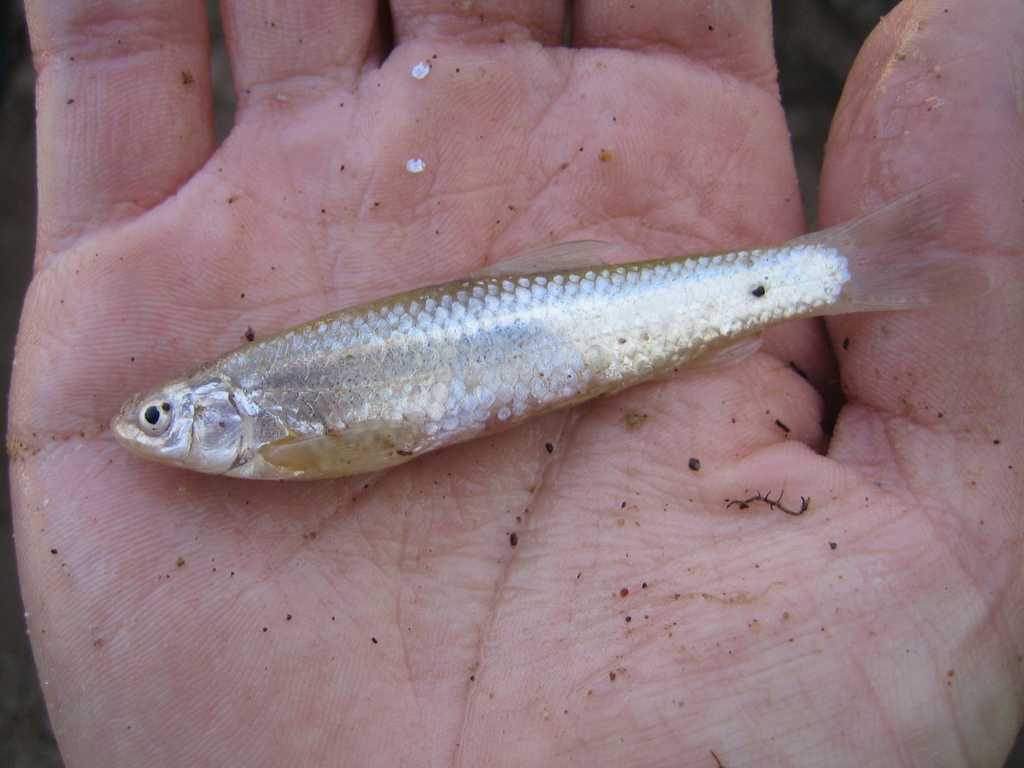
A small silver minnow with a blunt snout held flat on an open human palm.

Critically Endangered (IUCN) / Endangered (ESA)

Rio Grande Silvery Minnow

Hybognathus amarus

Once the most abundant fish in the Rio Grande, now restricted to a fraction of the river and dependent on hatchery releases and managed flows.

Region:
Middle Rio Grande, New Mexico
Principal threat:
River drying and flow diversion
View full profile →
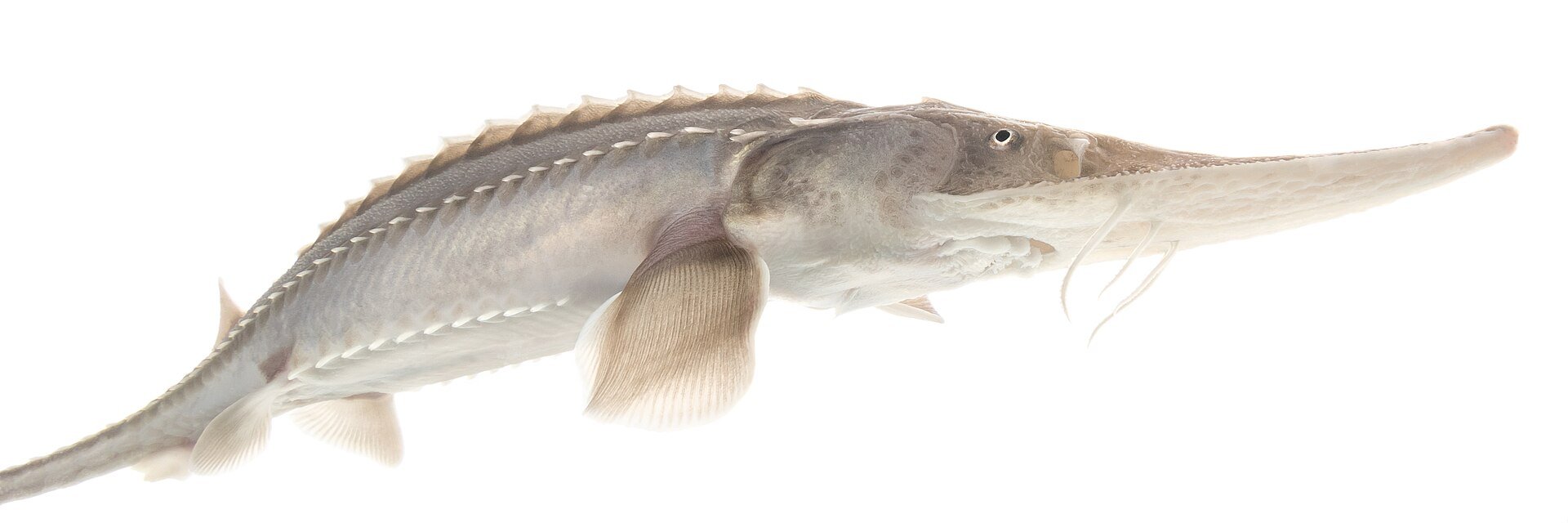
A pallid sturgeon photographed from the side against a plain background, showing its pale body and shovel-shaped snout.

Critically Endangered (IUCN) / Endangered (ESA)

Pallid Sturgeon

Scaphirhynchus albus

A Missouri and Mississippi River sturgeon that has largely stopped reproducing in the wild because the rivers no longer flow the way its eggs require.

Region:
Missouri and Mississippi River basins
Principal threat:
River channelization and altered flow
View full profile →
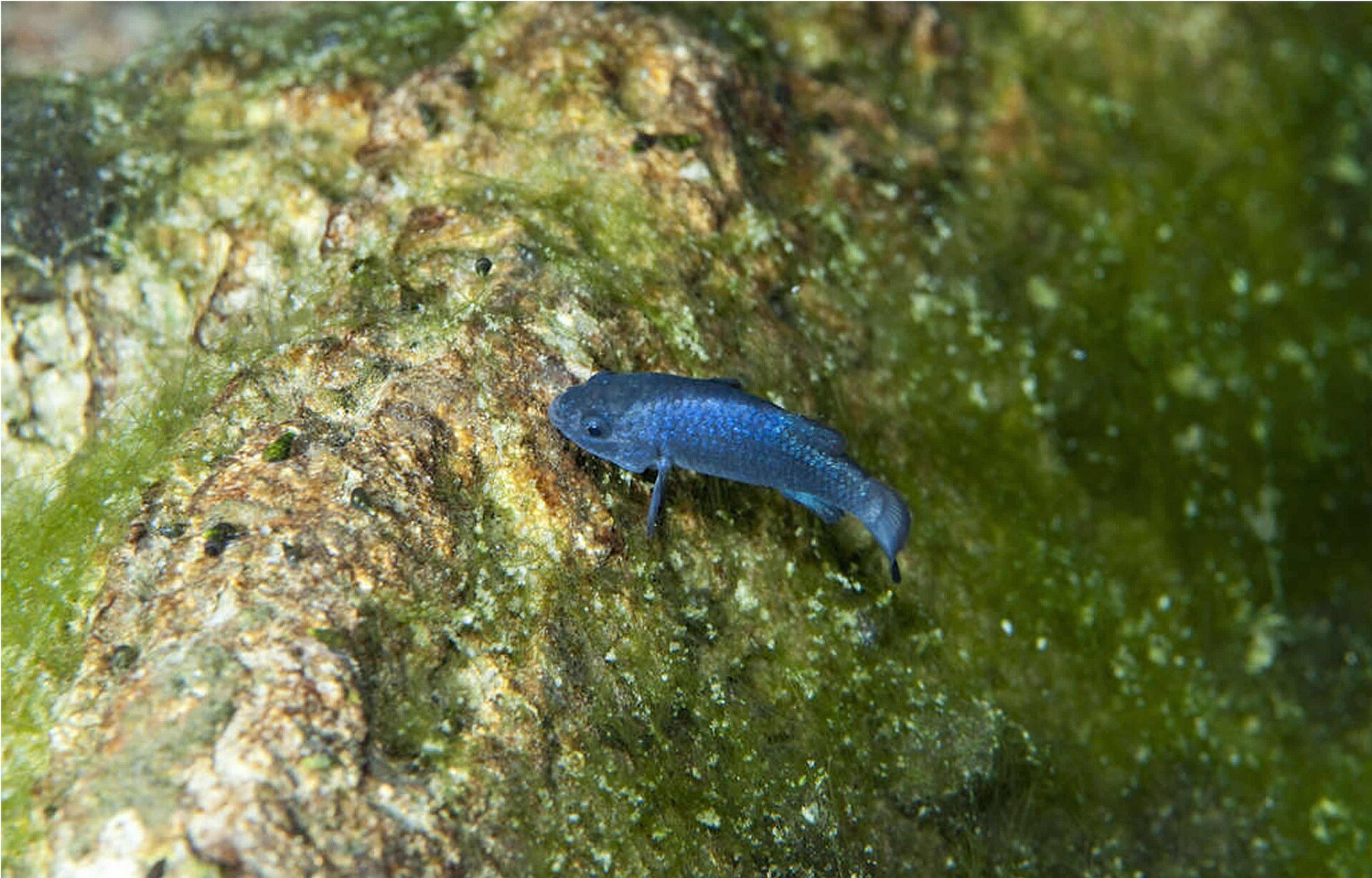
A small iridescent blue Devils Hole pupfish swimming over an algae-covered rock shelf.

Critically Endangered (IUCN) / Endangered (ESA)

Devils Hole Pupfish

Cyprinodon diabolis

The rarest fish in the world, living entirely in one water-filled limestone cavern in the Nevada desert.

Region:
Devils Hole, Nevada
Principal threat:
Groundwater depletion and its tiny single-site range
View full profile →