Plants
Texas Wild Rice
Zizania texana
An aquatic grass that grows in the wild in exactly one place on earth: the upper two miles of the San Marcos River in Texas.
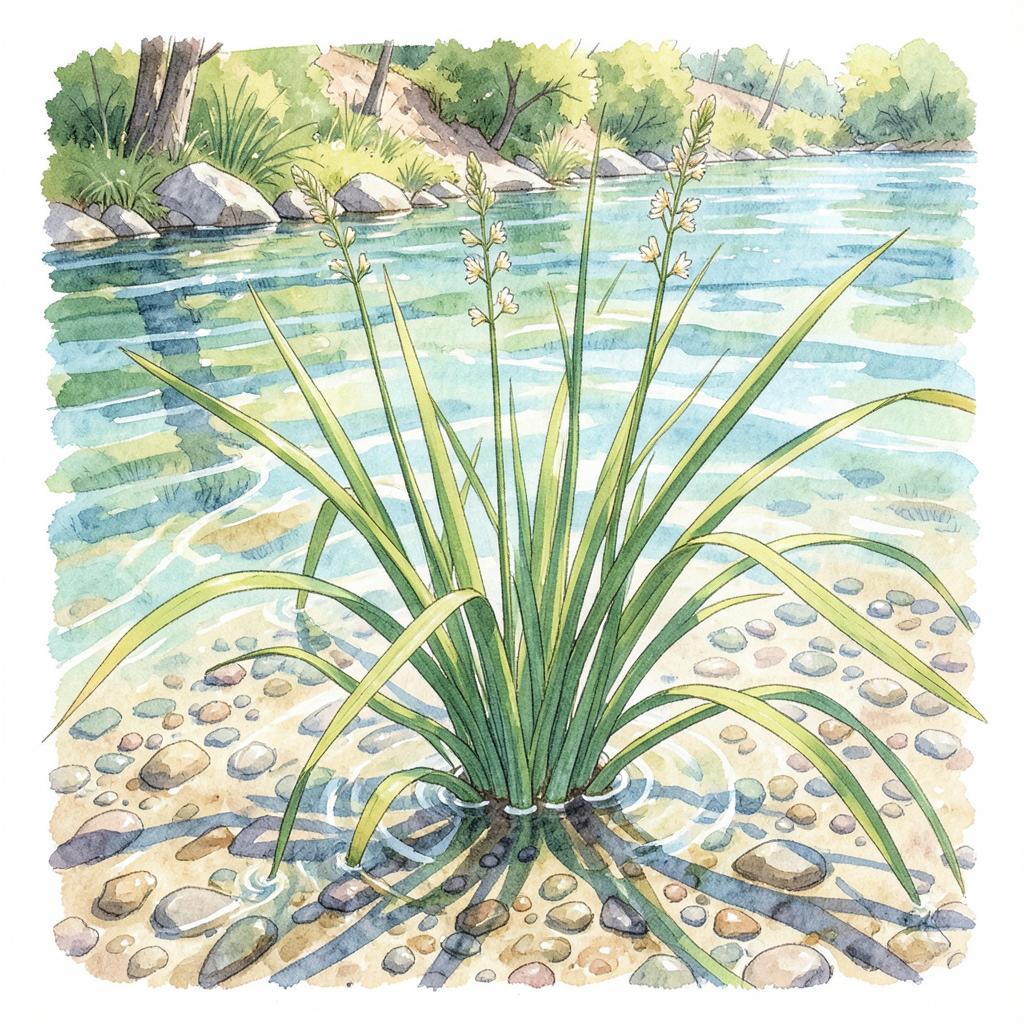
Illustrated Species Ambassador
Marcos — Texas Wild Rice
I'm Marcos, an illustrated ambassador for Texas wild rice. In the wild I grow in exactly one place: the upper two miles of the San Marcos River.
- One fact worth knowing
- Texas wild rice grows wild nowhere else on earth. It needs constantly flowing spring water and cannot survive in still or intermittent water.
- What I depend on
- I depend on continuous Edwards Aquifer spring discharge, water clear enough to let light through, and water shallow enough that my flowering stems reach the surface.
- My greatest threat
- My greatest threat is the loss of spring flow, together with impoundment and physical damage to the plants.
- One way you can help
- Conserve Edwards Aquifer water, keep out of marked wild rice stands when you are on the river, and volunteer for invasive plant removal and wild rice planting events.
This ambassador is an original illustration created for this project. It is an educational character, not a documentary image, and its statements follow the sourced record on this page. Artwork and rights record
Why this species matters
Texas wild rice is a wild relative of a cultivated grain, growing wild in one two-mile stretch of one river. It is also the physical structure that the endangered fountain darter and San Marcos salamander depend on — losing the plant would take other species with it.
If it disappears: The San Marcos River would lose its defining aquatic plant community and the habitat structure that supports several other endangered species.
Conservation status
- U.S. Endangered Species Act
- EndangeredListed 1978, with designated critical habitat.Last verified 2026-09-08
- IUCN Red List
- Critically EndangeredLast verified 2026-09-08
- Texas
- State endangeredLast verified 2026-09-08
- NatureServe
- Critically ImperiledLast verified 2026-09-08
Population
Measured as total area of living stands rather than as a plant count, and monitored regularly along the river. The occupied area has increased from historic lows through active restoration, but the entire wild population still occupies only a few thousand square meters.
Trend: Increasing
As reported: Edwards Aquifer Habitat Conservation Plan biological monitoring, ongoing
Source: Edwards Aquifer Authority; USFWS San Marcos Aquatic Resources Center; Texas State University
Uncertainty: Reporting occupied area rather than plant numbers is standard for this species, because stands spread clonally and individual plants cannot be reliably counted.
Historical: Once far more abundant in the San Marcos River and formerly present in Spring Lake and possibly the Guadalupe system.
Fragmentation: Restricted to scattered stands along a single two-mile reach of one river.
Range and distribution
Historic range: The San Marcos River and Spring Lake, Hays County, Texas.
Current range: The upper San Marcos River, plus refugia stock maintained at the San Marcos Aquatic Resources Center.
Range contraction: Lost from Spring Lake and reduced within the river itself.
Regions occupied
- Hays County, Texas — upper San Marcos River
Habitat
Primary habitat: Clear, cool, constantly flowing spring-fed water 1 to 3 feet deep with gravel and sand substrate.
Breeding habitat: Flowering stems must emerge above the water surface to be wind-pollinated and set seed.
Feeding habitat: Photosynthesis in strong light through clear water.
Critical habitat: Critical habitat designated along the upper San Marcos River.
Habitat dependencies
- Continuous Edwards Aquifer spring discharge — the plant cannot survive in still or intermittent water
- Water clear enough to transmit light
- Flowering stems able to reach the surface, which fails in water made too deep by impoundment
Biology and ecology
Forms underwater meadows that shelter the fountain darter, San Marcos salamander, and numerous invertebrates, and stabilizes the river bed.
Important adaptations: Long flexible leaves that streamline in current, and a rooted mat that resists scouring flows.
- Size
- Leaves can reach several feet in length, trailing in the current.
- Lifespan
- Perennial, spreading clonally through the rooted mat.
- Diet
- Autotrophic.
- Reproduction
- Reproduces both clonally, by spreading stolons, and sexually, when flowering stems emerge above water. Sexual reproduction is rare in the wild, which limits genetic diversity.
- Offspring
- Seed set is low and much of the population reproduces vegetatively.
- Breeding frequency
- Flowering occurs when conditions allow, primarily in spring and summer.
Primary threats
Groundwater pumping
Edwards Aquifer withdrawal reduces spring discharge; without flow, the plant cannot survive.
Drought
Reduced flow raises water temperature, lowers clarity, and can strand or kill stands.
Recreation damage
The San Marcos River is heavily used for tubing, swimming, and wading. Foot traffic uproots stands directly, and this is the most immediate physical threat.
Invasive species
Hydrilla, water hyacinth, and elephant ear crowd out wild rice; introduced nutria and other grazers eat it.
Impoundment
Dams raise water levels above the depth at which flowering stems can reach the surface, preventing sexual reproduction.
Sedimentation
Urban runoff clouds the water and buries the plant beds.
Low genetic diversity
Predominantly clonal reproduction leaves the population genetically narrow.
Conservation and recovery
Programs and efforts
- Edwards Aquifer Habitat Conservation Plan guaranteeing minimum spring flows
- Active restoration planting of wild rice stands along the river
- Refugia population and seed banking at the USFWS San Marcos Aquatic Resources Center
- Invasive aquatic plant removal and nutria control
- River recreation management including designated access points and public education
Protected areas
- Spring Lake and the San Marcos River headwaters
- Designated critical habitat
- Texas State University Meadows Center property
Legal protections
- Endangered Species Act
- Designated critical habitat
- Texas state endangered listing
- Edwards Aquifer Authority pumping limits
Measurable progress
- Restoration planting has substantially increased the total occupied area from historic lows
- Refugia stock and seed banking provide genuine insurance against a catastrophic event
- Recreation management has reduced trampling in key reaches
Continuing challenges
- Recreation pressure keeps rising
- Water demand in central Texas continues to grow
- Genetic diversity is inherently limited
How people can help
What individuals can do
- When tubing or swimming in the San Marcos River, stay in the channel and never stand on or walk through the underwater grass beds
- Conserve water in the Edwards Aquifer region
- Never release aquarium plants into any waterway
What communities can do
- Support river access management and designated entry points
- Back Edwards Aquifer Habitat Conservation Plan implementation
Educational actions
- Visit the Meadows Center at Spring Lake to see the plant and the spring system in person
Habitat support
- Volunteer for invasive plant removal and wild rice planting events on the river
Organizations and programs to learn about
- USFWS San Marcos Aquatic Resources Center
- The Meadows Center for Water and the Environment
- Edwards Aquifer Authority
Educational notes
- A wild relative of cultivated wild rice, growing wild in one place on earth.
- Occupied area, not plant count, is the standard measure.
- Standing on the grass beds while tubing is the single most damaging everyday behavior.
Sources and references
- U.S. Fish and Wildlife Service — Texas Wild Rice — USFWS
- IUCN Red List — Zizania texana — IUCN
- Edwards Aquifer Habitat Conservation Plan — Edwards Aquifer Authority