Reptiles and Amphibians
Barton Springs Salamander
Eurycea sosorum
A gilled salamander that lives only in the spring outlets at Barton Springs in Austin, Texas, and nowhere else on earth.
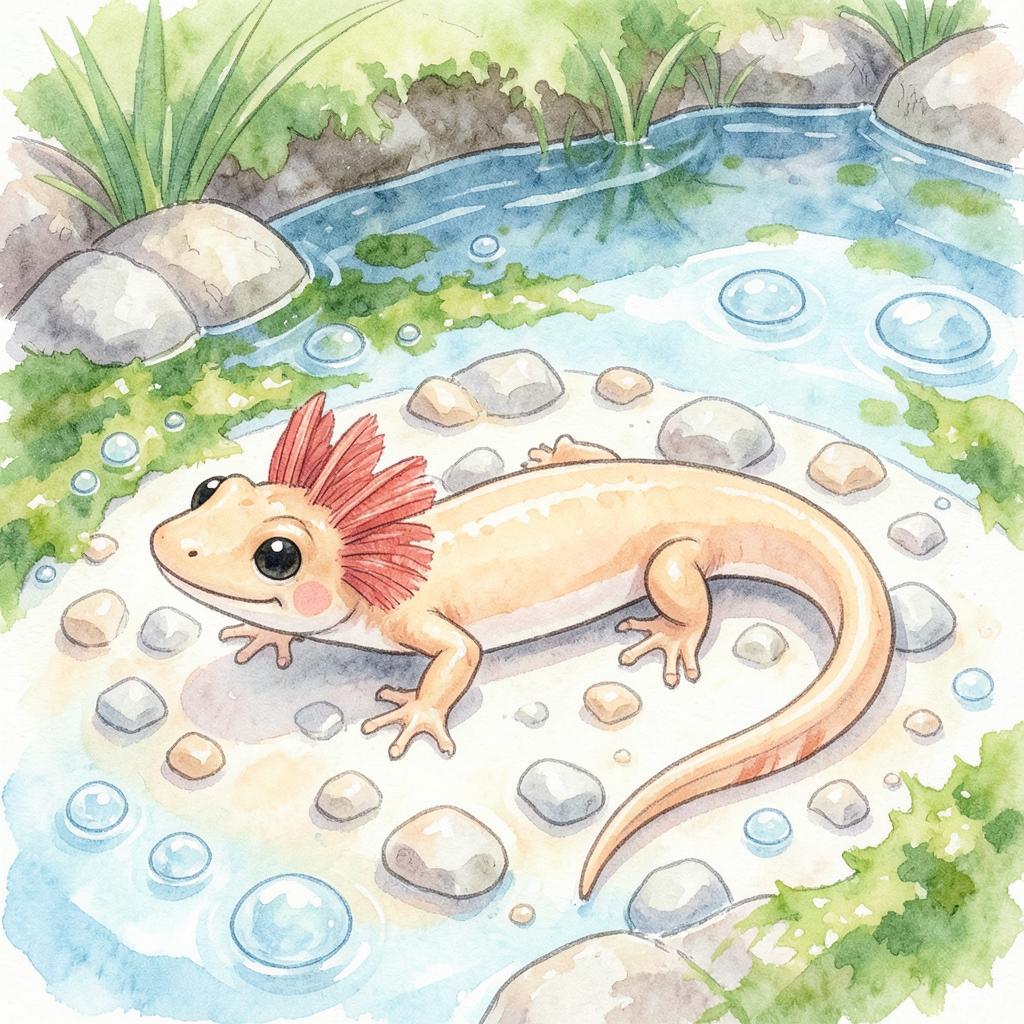
Illustrated Species Ambassador
Sosa — Barton Springs Salamander
I'm Sosa, an illustrated ambassador for the Barton Springs salamander. I live in the spring outlets in the middle of Austin, Texas, and nowhere else in the world.
- One fact worth knowing
- This salamander is found only at the Barton Springs outlets. It keeps its feathery external gills for life and never leaves the water.
- What I depend on
- I depend on clean, constant-temperature groundwater flowing out of the Edwards Aquifer over gravel and cobble that has not been buried in sediment.
- My greatest threat
- My greatest threat is urban runoff reaching the aquifer, together with reduced spring flow.
- One way you can help
- Skip lawn fertilizer and pesticides anywhere over the Edwards Aquifer recharge zone, fix vehicle oil leaks, and conserve water during drought so the springs keep flowing.
This ambassador is an original illustration created for this project. It is an educational character, not a documentary image, and its statements follow the sourced record on this page. Artwork and rights record
Why this species matters
This salamander lives in water that hundreds of thousands of people drink from and swim in. Its condition is a direct, continuous readout of what Austin puts into the Edwards Aquifer.
If it disappears: Extinction would mean the aquifer feeding a major city's iconic swimming hole had been degraded past the point of supporting its own native life.
Cultural and regional note: Barton Springs is one of Austin's most visited public places, which gives this species unusually direct public visibility.
Conservation status
- IUCN Red List
- VulnerableLast verified 2026-09-08
- U.S. Endangered Species Act
- EndangeredListed 1997.Last verified 2026-09-08
- Texas
- Endangered (state listed)Last verified 2026-09-08
Population
Counted in the hundreds across four spring outlets. The City of Austin conducts regular counts; totals fluctuate substantially with spring flow and sediment conditions.
Trend: Unknown
As reported: City of Austin Watershed Protection Department salamander monitoring, ongoing
Source: City of Austin Watershed Protection Department; U.S. Fish and Wildlife Service
Uncertainty: Counts are surface observations at accessible spring outlets and do not include salamanders inside the aquifer, so they are an index rather than a census.
Fragmentation: The entire species occupies four spring outlets within a single park.
Range and distribution
Historic range: The Barton Springs complex, fed by the Barton Springs segment of the Edwards Aquifer.
Current range: Main Barton Springs pool outlet, Eliza Spring, Old Mill Spring, and Upper Barton Spring — a total area of a few thousand square feet.
Range contraction: The species has always had a tiny range; the concern is degradation rather than range loss.
Regions occupied
- Austin, Travis County, Texas
Habitat
Primary habitat: Spring outlets with clean, constant-temperature groundwater flowing over gravel and cobble.
Breeding habitat: Eggs are laid in the aquifer and among submerged gravel.
Feeding habitat: Feeds on tiny aquatic invertebrates among the gravel.
Critical habitat: Critical habitat designated at the Barton Springs complex.
Habitat dependencies
- Continuous flow from the Barton Springs segment of the Edwards Aquifer
- Clean, sediment-free gravel substrate
- Stable groundwater temperature near 68–70°F
Biology and ecology
A top invertebrate predator within a tiny spring ecosystem and a direct indicator of Edwards Aquifer water quality.
Important adaptations: Neotenic — it keeps its external gills and remains fully aquatic for life, never transforming into a land-dwelling adult.
- Size
- About 2.5 inches long.
- Weight
- A fraction of an ounce.
- Lifespan
- Estimated several years.
- Diet
- Amphipods, small crustaceans, and aquatic insect larvae.
- Reproduction
- Breeds year-round in the constant-temperature spring water.
- Offspring
- Small clutches of eggs.
- Breeding frequency
- Continuous rather than seasonal.
- Age at maturity
- Under a year.
Primary threats
Pollution
Urban runoff carrying oil, pesticides, fertilizer, and heavy metals enters the aquifer through recharge features.
Sedimentation
Silt from construction and stormwater fills the gravel interstices the salamanders live in.
Reduced flow
Groundwater pumping and drought lower spring discharge; if flow stops, the species has nowhere to go.
Development
Growth over the aquifer's contributing and recharge zones increases impervious cover and runoff.
Pool maintenance
Historic pool cleaning practices damaged habitat; procedures are now managed under federal permit.
Extremely small range
A single contaminant spill into the recharge zone could affect the entire species.
Conservation and recovery
Programs and efforts
- City of Austin Barton Springs salamander conservation and habitat management program
- Captive assurance colony maintained by the City of Austin
- Barton Springs Edwards Aquifer Conservation District water management
- Austin's Save Our Springs water quality ordinance and land acquisition over the recharge zone
Protected areas
- Zilker Park and Barton Springs, Austin
- Barton Creek Wilderness Park
- City-owned water quality protection lands over the aquifer
Legal protections
- Endangered Species Act
- Designated critical habitat
- Texas state endangered listing
- City of Austin watershed ordinances
Measurable progress
- Austin has acquired tens of thousands of acres over the recharge zone to protect water quality
- A captive assurance colony provides insurance against a catastrophic event
Continuing challenges
- Continued growth over the recharge zone
- Drought reduces spring flow
- The whole species occupies one site
How people can help
What individuals can do
- Avoid lawn fertilizer and pesticides anywhere over the Edwards Aquifer recharge zone
- Fix vehicle oil leaks; the same runoff reaches the springs
- Conserve water during drought to help maintain spring flow
- Follow posted rules at Barton Springs and do not disturb the spring outlets
What communities can do
- Support water quality protection land acquisition and impervious cover limits over the recharge zone
Educational actions
- Visit Eliza Spring's viewing area to see a listed species in the middle of a city
Habitat support
- Support Barton Creek watershed restoration and native landscaping over the aquifer
Organizations and programs to learn about
- City of Austin Watershed Protection Department
- USFWS Austin Ecological Services
- Barton Springs Edwards Aquifer Conservation District
Educational notes
- An entire species living within a city park — an unusually direct link between urban choices and extinction risk.
- Neoteny, keeping juvenile gills for life, is a memorable biological concept.
Sources and references
- IUCN Red List — Eurycea sosorum — IUCN
- U.S. Fish and Wildlife Service — Barton Springs Salamander — USFWS
- City of Austin — Barton Springs Salamander — City of Austin Watershed Protection