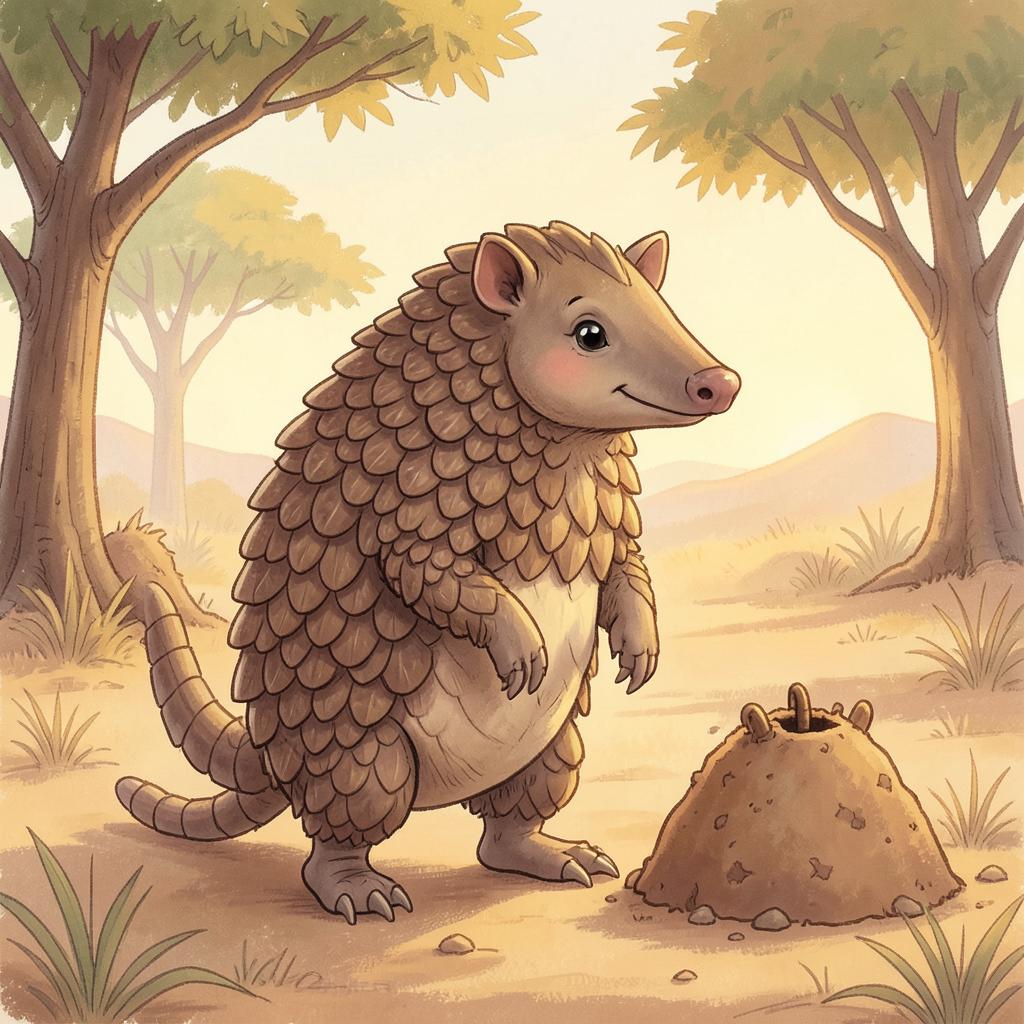
The book
Pango’s Secret Armor
The Little Creature Who Needed Big Friends
A picture book about an animal whose whole defence is to curl up and wait — and about what happens when the danger is something armor was never built for.
About the story
What it is about
Pango is small, quiet, and armored. That armor works — until it does not. The story follows what happens when a creature’s own defences are no longer enough, and others have to decide whether a small life that offers them nothing is worth the trouble of protecting.
It is written to be read aloud in about fifteen minutes, and to leave a group with something to argue about afterwards.
Who it is for
- Ages 5–8 as a read-aloud picture book.
- Ages 9–12 as a starting point for work on habitat and the wildlife trade.
- Classrooms, homeschool groups, libraries, church and youth groups, and families.
- Anyone who wants a way into conservation that is honest about the difficulty and still hopeful.
The real science behind the story
Pango is a drawn character. Everything the story rests on is drawn from the sourced species records on this site.
Scales, not shell
A pangolin's armor is made of keratin — the same material as human fingernails and hair — formed into overlapping plates that cover the back, sides, and tail.
Rolling up
When threatened, a pangolin curls into a tight ball with the head tucked inside. It is an effective defence against a predator's teeth, and useless against a person who can simply lift it.
An ant-and-termite diet
Pangolins have no teeth. They open nests with heavy claws and collect insects with a long sticky tongue, which makes them part of how insect numbers are kept in balance.
Why they are in trouble
Pangolins are taken for their scales and meat, and their habitat is being cleared. All three species profiled on this site carry a threatened conservation status.
Read it with a group
Free PDF
Reading guide
Before, while, and after prompts for ages 5–8, plus a going-further set for 9–12.
Free PDF
Lesson plans
Two full plans: habitat for lower primary, and the wildlife trade for upper primary.
Living Atlas
Find pangolins on the map
Where pangolins live, shown as broad regions on purpose — an exact location can put an animal in danger.
Honesty notes
- Pango is an illustrated character, never presented as a wildlife photograph.
- No conservation statistic appears in this section unless it is on a sourced species profile with its verification date.
- Book merchandise, plush companions, and classroom kits are planned concepts, not products for sale. What is planned →