Learning Resources
Material you can use tomorrow
A reading guide, discussion questions, and an activity sheet built around Pango and real pangolin conservation. Everything on this page is complete and usable. Anything not yet written is listed separately and is not pretending to be a download.
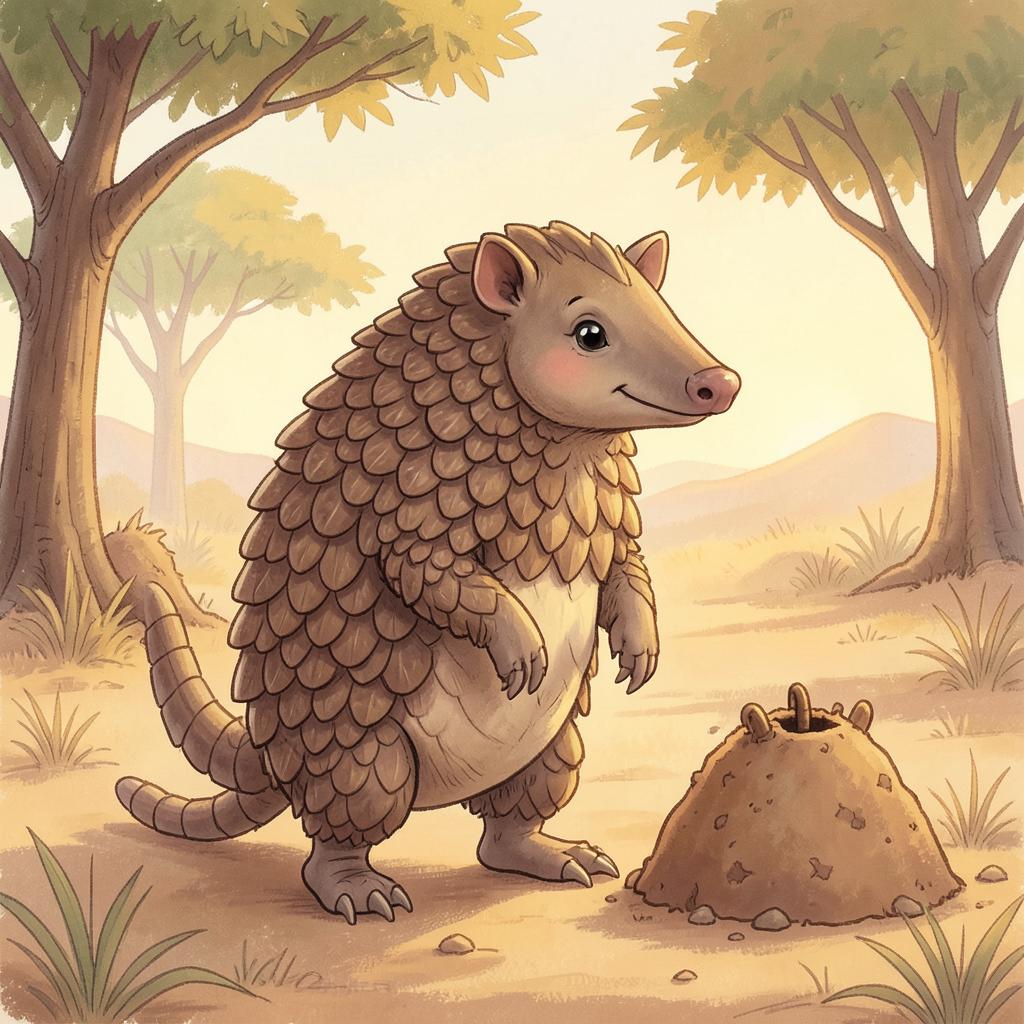
“Ask the questions first. Facts stick better once someone is already curious.” — Pango, illustrated guide
Reading guide
For reading Pango's Secret Armor aloud, or for any story about a small creature and the people who help it.
Ages 5–8
Before you read
- Ask what an animal does when it is frightened. Collect answers: run, hide, freeze, make noise.
- Show the picture of Pango and ask what this animal might do. It rolls into a ball.
- Say the one fact the whole book rests on: pangolin scales are made of keratin, the same material as fingernails.
Ages 5–8
While you read
- Pause when Pango is afraid. Ask: is armor enough this time?
- Notice who helps. Ask what each helper actually does, not just how they feel.
- Count how many small actions add up before anything changes.
Ages 5–8
After you read
- Ask what a 'big friend' means. Steer toward: someone who uses what they have to help someone smaller.
- Name one small creature near your home that could use a big friend.
- Decide together on one thing your family, class, or group will actually do this month.
Ages 9–12
Going further
- Read the Sunda pangolin profile on this site and list three facts the story matches.
- Explain in your own words why a defence that works against a leopard fails against a person.
- Find where pangolins live on the Living Atlas and describe why the map does not show exact locations.
Discussion questions
Open questions with no single right answer. Adjust the wording to the age of the group.
About the story
- What is Pango's armor good for, and what is it useless against?
- Who helps Pango, and what does each one give up in order to help?
- Was Pango helped because Pango was useful, or for another reason? Does the difference matter?
- What would have happened if nobody had noticed Pango at all?
About real pangolins
- Pangolin scales are keratin, like fingernails. Why does that fact matter to people who buy them?
- Pangolins eat ants and termites. What might change in a place where pangolins disappear?
- Why is an animal that rolls into a ball easy for a person to pick up?
- Which is harder to fix: hunting an animal, or removing the place it lives?
About us
- What does it mean to be a 'big friend' to something that cannot thank you?
- Name one creature you have never thought about that lives near you.
- What is one thing you could keep doing every month, not just once?
- Why is telling someone else a true fact a form of help?
Conservation activity sheet
Five activities, roughly an hour and a half in total, ending with something that continues after the session.
1. The keratin test
10 minutes
Look at your fingernails. That is keratin. Pangolin scales are the same material, pressed into overlapping plates. Write one sentence you could say to someone who believed the scales were medicine.
2. Draw the defence
15 minutes
Draw a pangolin curled into a ball. Label what the ball protects and what it leaves exposed. Then draw the one situation where the ball does not work.
3. Count the ants
20 minutes, outdoors
Find an ant trail near your home, school, or church. Watch it for five minutes and count how many ants pass one point. Write down what would happen to that trail if something ate from it every night.
4. One patch, one promise
30 minutes, plus follow-up
Choose one small patch of ground your group can look after: a garden bed, a strip by a fence, a stretch of creek bank. Write what you will do to it, who will do it, and when you will come back. Put the return date on a calendar.
5. Tell one person
5 minutes
Teach one person outside your group a single true fact about pangolins. Write down their first question. Bring it back to the group — the questions people ask show what teaching is still needed.
Pair these with a species profile so the group is working with a real, sourced animal rather than a general idea. Browse species profiles →
Printable downloads
All six are written and ready. Letter-size PDFs, free to print for classroom, church, youth-group, and family use.
Reading guide
Reading guide
Before, while, and after reading prompts for ages 5–8, a going-further set for ages 9–12, and five words worth teaching.
Ages 5–12 · 2 pages
Worksheet
Discussion question worksheet
Twelve open questions across the story, real pangolins, and ourselves, with writing lines and a closing commitment.
Ages 7+ · 2 pages
Activity sheet
Conservation activity sheet
Five activities ending with one patch of ground, two named people, and a return date on the calendar.
All ages, with a leader · About 90 minutes
Lesson plan
Lesson plan: pangolins and the wildlife trade
Learning intentions, a five-part sequence, discussion questions, assessment tiers, and cautions on quoting figures.
Ages 9–12 · 60 minutes + extension
Lesson plan
Lesson plan: habitat and the animals that depend on it
A concrete, local lesson on what a habitat provides, including a short outdoor walk and a drawing task.
Ages 5–8 · 45 minutes + habitat walk
Session outline
Church and youth group stewardship session outline
A stewardship session that ends by adopting one patch of ground, naming who is responsible, and fixing a review date.
Mixed ages, with a leader · 50–75 minutes
The same downloads, plus notes on reading the book aloud, are on the book site: Pango’s Secret Armor resources →