Species Focus Area

Birds

Birds connect distant places. A bird nesting far north may depend entirely on a stopover field or wetland in your county.

Why this group matters

Because birds move across continents, their decline reports on habitat quality over enormous areas at once. They are the most widely monitored group in conservation.

Common threats

  • · Loss of nesting and stopover habitat
  • · Window and structure collisions
  • · Insect decline reducing food for nestlings
  • · Free-roaming cats and nest predation

How people can help

  • · Plant native trees and shrubs that produce insects and berries
  • · Treat windows to reduce strikes and keep cats indoors
  • · Join surveys and report banded or marked birds

Ten Birds of Exceptional Conservation Concern

These ten are not a scientific ranking. They were selected for conservation urgency, teaching value, and regional relevance, and each one has a complete, sourced profile.

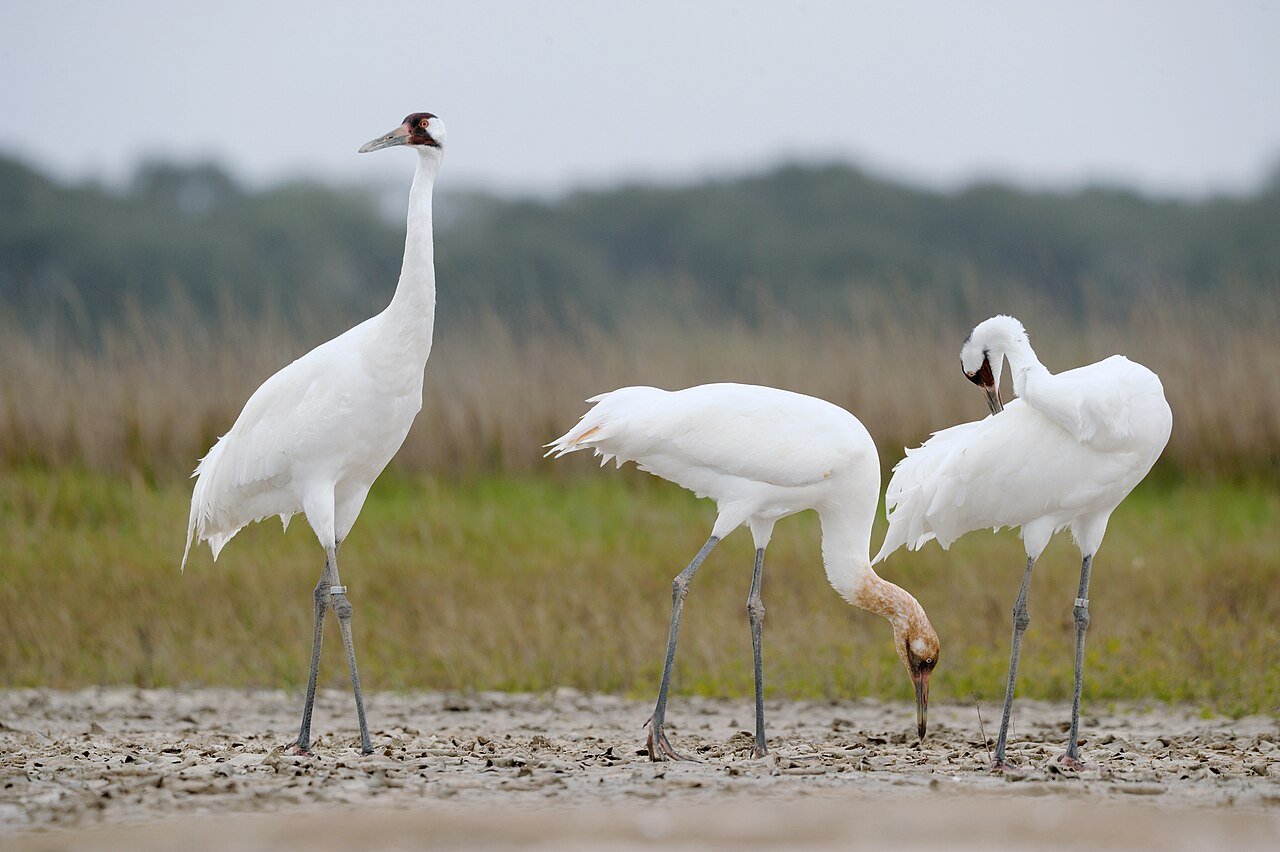
Three whooping cranes standing in a coastal marsh, showing white plumage and red crowns.

Endangered (IUCN and ESA)

Whooping Crane

Grus americana

North America's tallest bird, rebuilt from about 15 birds in the 1940s to a wild flock that migrates 2,500 miles to the Texas coast.

Region:
Canada to the Texas Gulf Coast
Principal threat:
Wetland loss and power line collisions
View full profile →
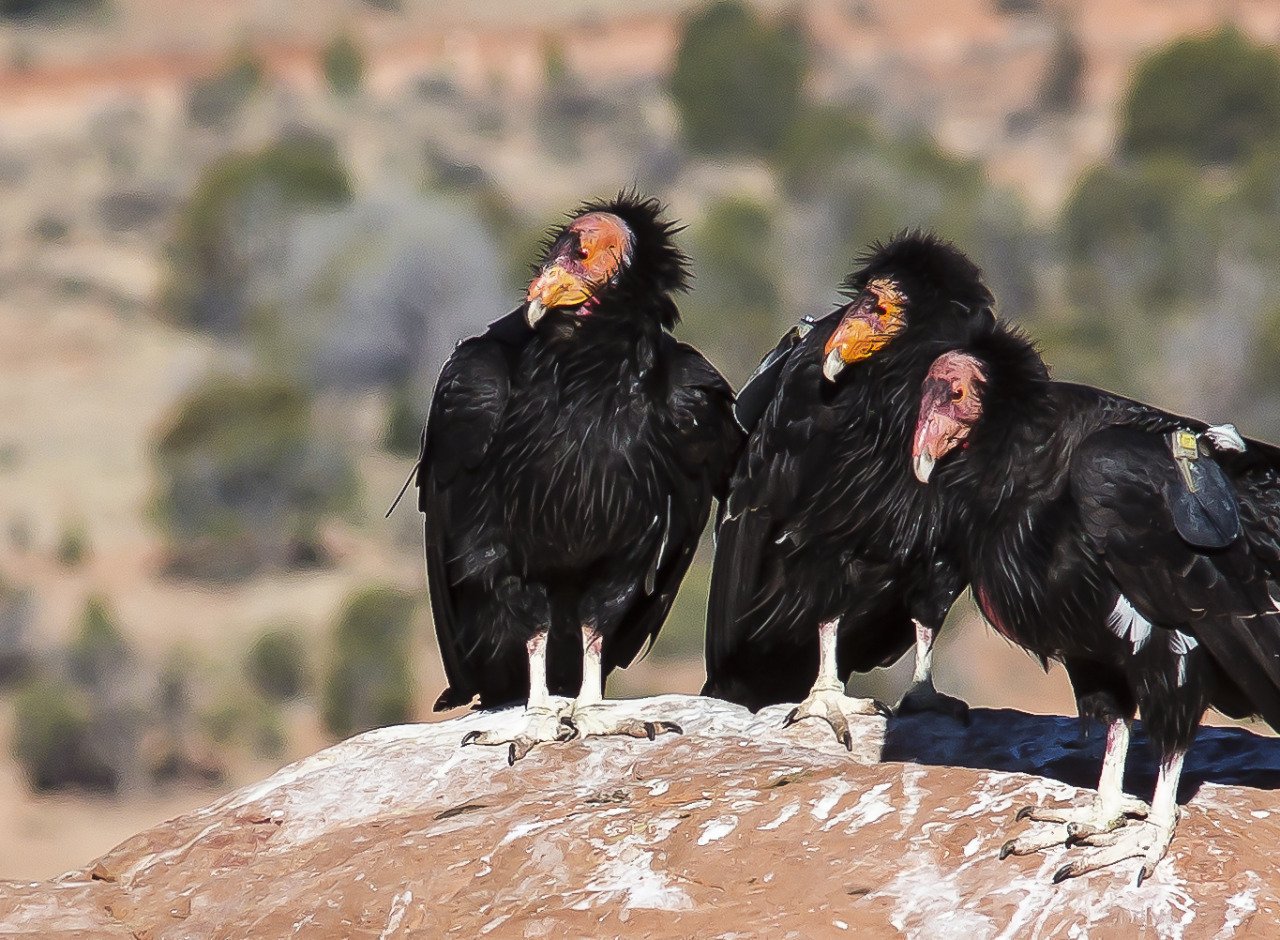
Two California condors standing side by side on a rock, showing bare orange heads and black plumage.

Critically Endangered (IUCN) / Endangered (ESA)

California Condor

Gymnogyps californianus

North America's largest land bird, taken entirely into captivity in 1987 at 27 individuals and returned to the wild since 1992.

Region:
California, Arizona, Utah, and Baja California
Principal threat:
Lead poisoning from spent ammunition
View full profile →
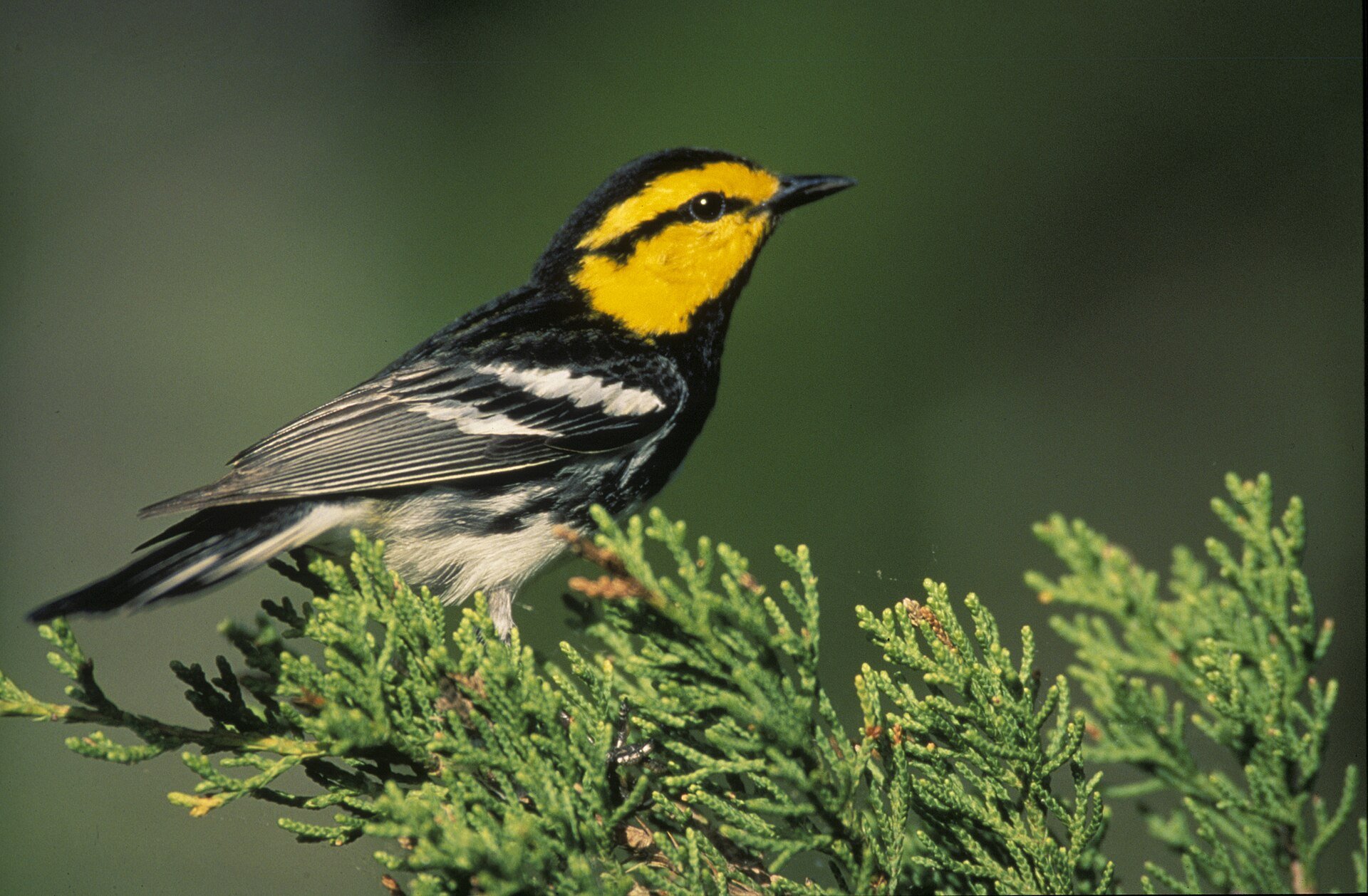
A golden-cheeked warbler perched on a juniper branch, showing its yellow face and black throat.

Endangered (IUCN and ESA)

Golden-cheeked Warbler

Setophaga chrysoparia

The only bird species that nests exclusively in Texas, building its nest from the bark of mature Ashe juniper.

Region:
Central Texas (breeding); Mexico and Central America (winter)
Principal threat:
Clearing and fragmentation of juniper-oak woodland
View full profile →
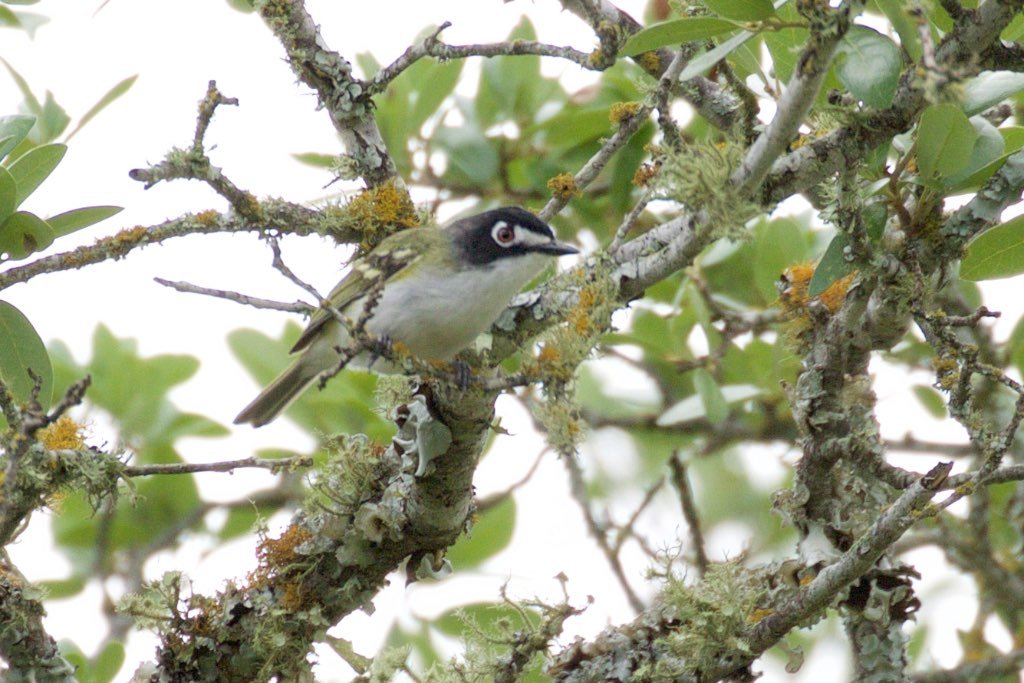
A black-capped vireo perched among oak leaves, showing its black head and white spectacles.

Near Threatened (IUCN); ESA delisted 2018

Black-capped Vireo

Vireo atricapilla

A small shrubland songbird removed from the U.S. endangered list in 2018 after recovery, and still dependent on active habitat management.

Region:
Texas, Oklahoma, and Mexico
Principal threat:
Shrubland succession and cowbird parasitism
View full profile →
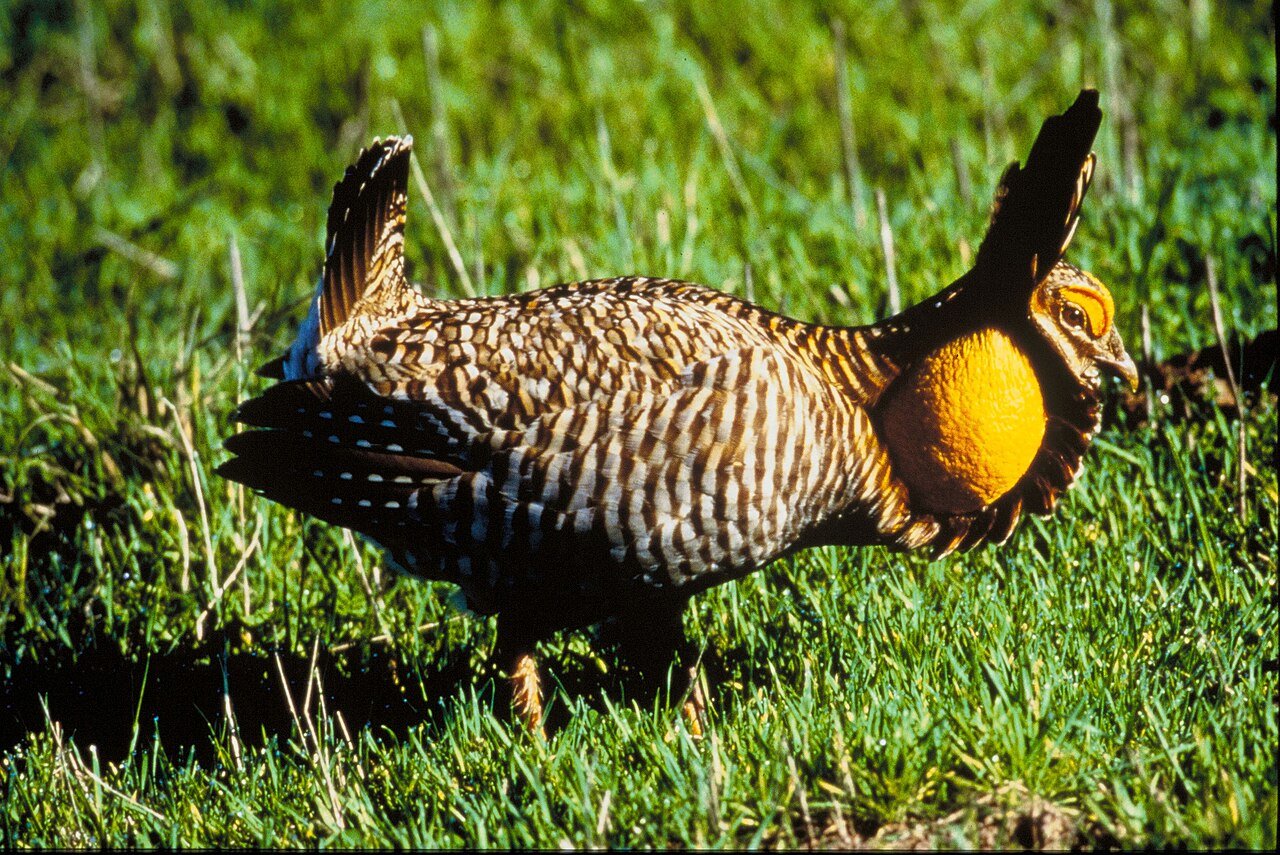
A male Attwater's prairie-chicken displaying on coastal prairie, with orange neck sacs inflated and neck feathers raised.

Endangered (ESA, subspecies)

Attwater's Prairie-Chicken

Tympanuchus cupido attwateri

A coastal prairie grouse down to a few dozen wild birds, surviving only through annual captive releases on the Texas Gulf Coast.

Region:
Texas Gulf Coast prairie
Principal threat:
Loss of coastal tallgrass prairie
View full profile →
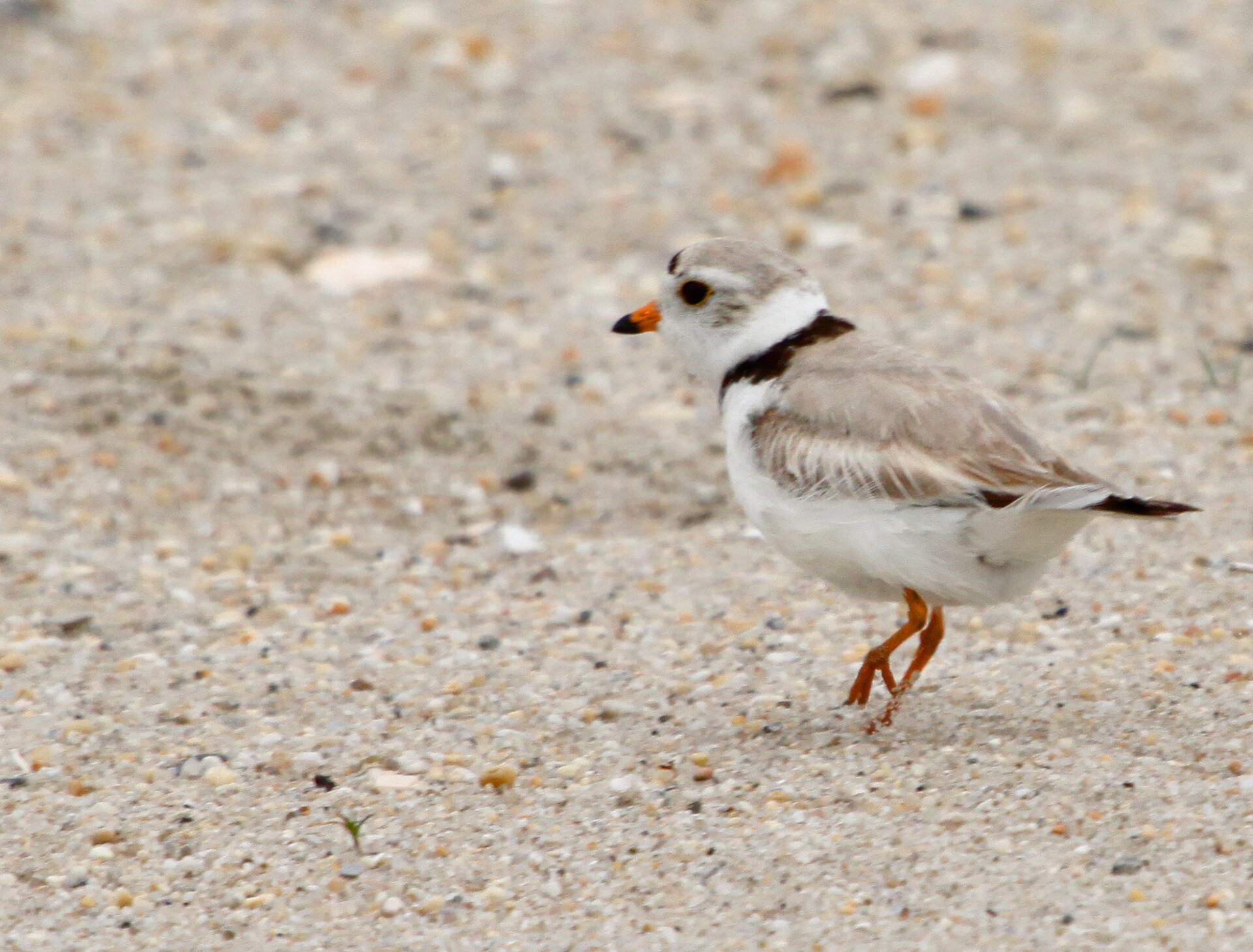
A piping plover standing on sand, showing its pale grey back, orange legs and black neck band.

Near Threatened (IUCN); Endangered and Threatened (ESA by population)

Piping Plover

Charadrius melodus

A small sand-colored shorebird that nests on open beaches and river sandbars and winters heavily on the Texas coast.

Region:
North American beaches, plains rivers, and Gulf Coast
Principal threat:
Beach disturbance and loss of open nesting habitat
View full profile →
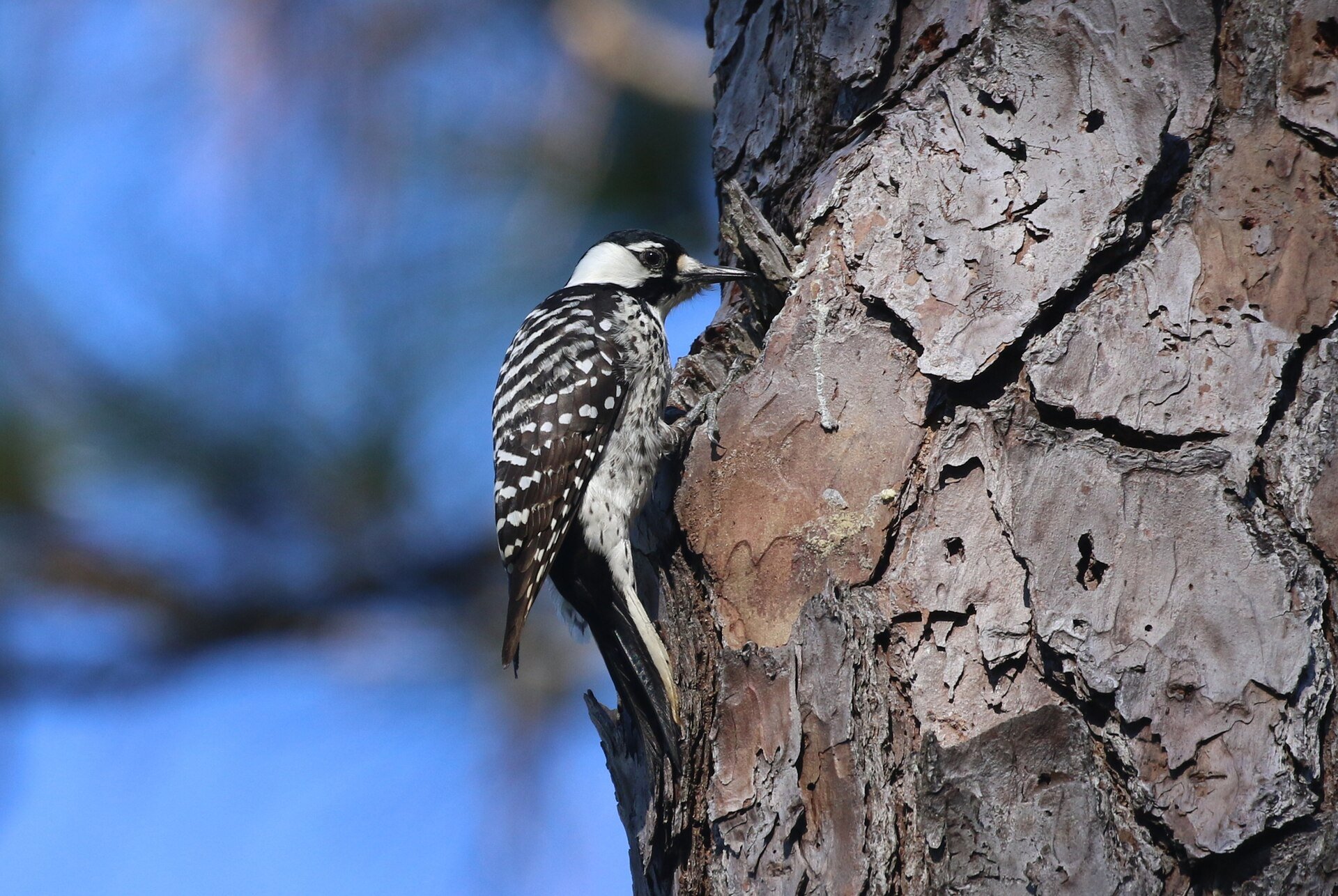
A red-cockaded woodpecker clinging to a pine trunk, showing its black-and-white barred back and white cheek.

Near Threatened (IUCN) / Threatened (ESA)

Red-cockaded Woodpecker

Dryobates borealis

The only woodpecker that excavates its nest in living pines, downlisted from endangered to threatened in 2024 after decades of longleaf pine restoration.

Region:
Southeastern United States pine forests
Principal threat:
Loss of old-growth longleaf pine and fire suppression
View full profile →
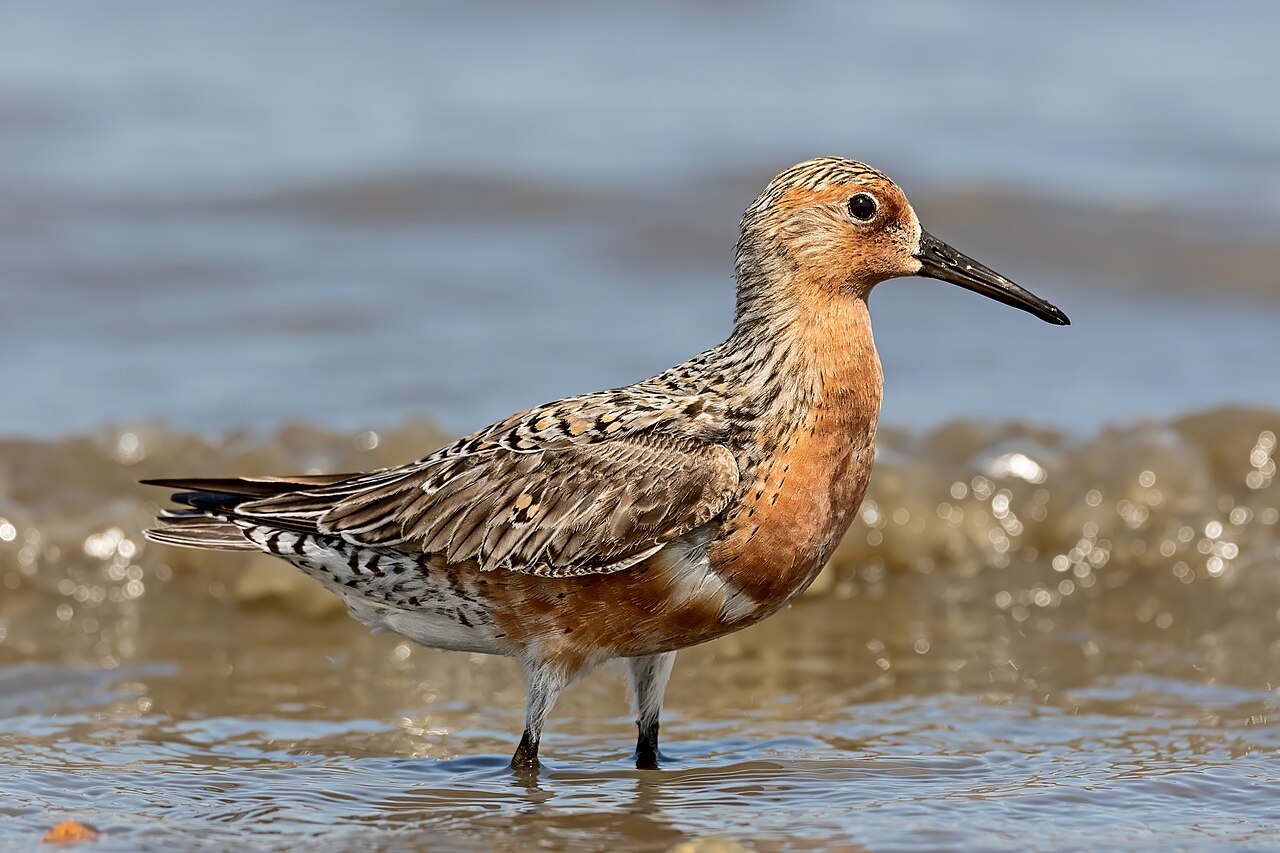
A red knot in rich rust-orange breeding plumage standing in shallow surf on a sandy shore.

Near Threatened (IUCN, species) / Threatened (ESA, subspecies)

Rufa Red Knot

Calidris canutus rufa

A shorebird flying up to 9,000 miles between the Arctic and Tierra del Fuego, dependent on horseshoe crab eggs to refuel.

Region:
Arctic Canada to Tierra del Fuego
Principal threat:
Loss of horseshoe crab eggs at migration stopovers
View full profile →
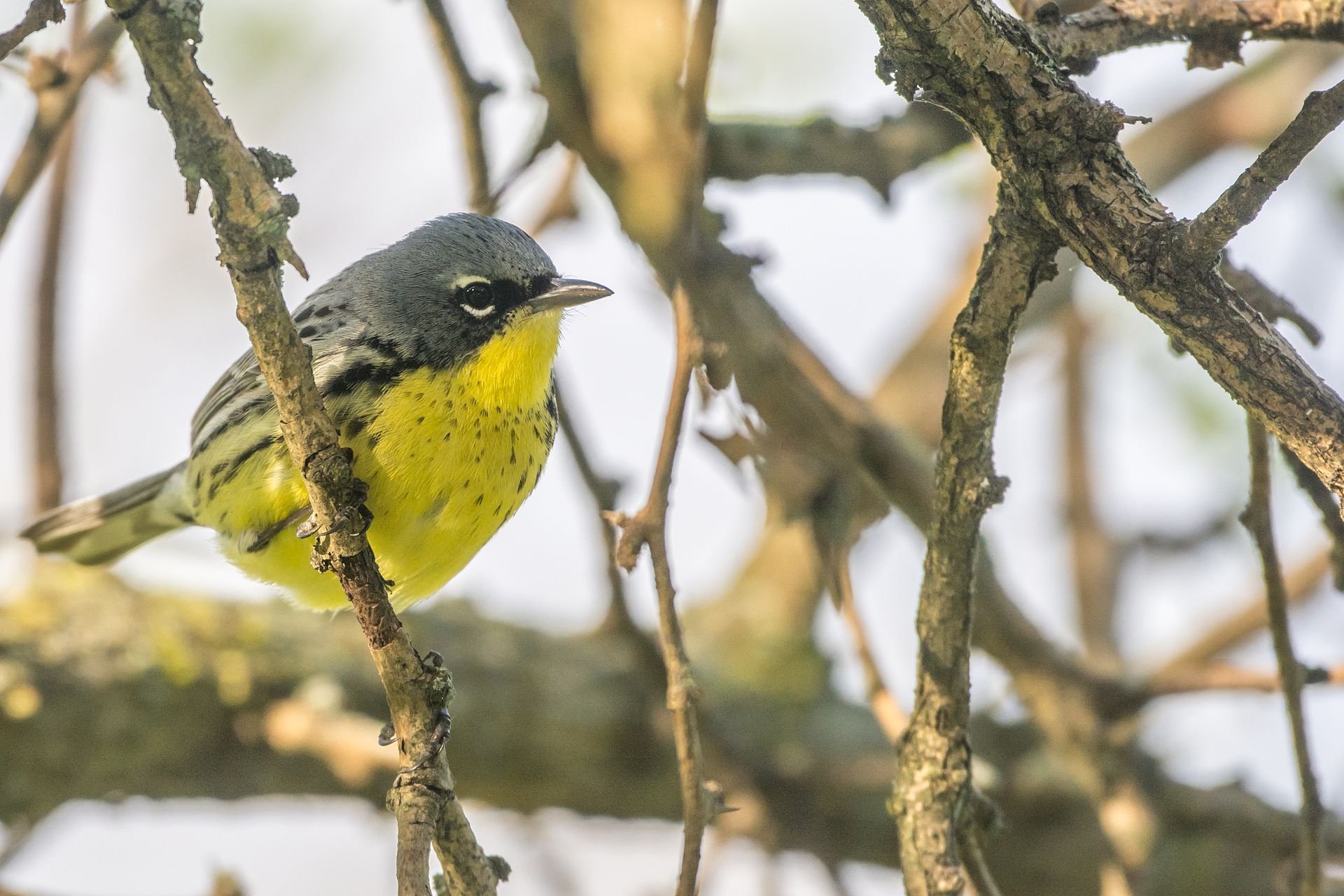
A Kirtland's warbler with a yellow breast and grey streaked back perched among bare twigs.

Near Threatened (IUCN); ESA delisted 2019

Kirtland's Warbler

Setophaga kirtlandii

A jack pine specialist delisted in 2019 after recovery, still dependent on managed young forest and continuous cowbird control.

Region:
Michigan, Wisconsin, Ontario; winters in the Bahamas
Principal threat:
Loss of young jack pine stands and cowbird parasitism
View full profile →
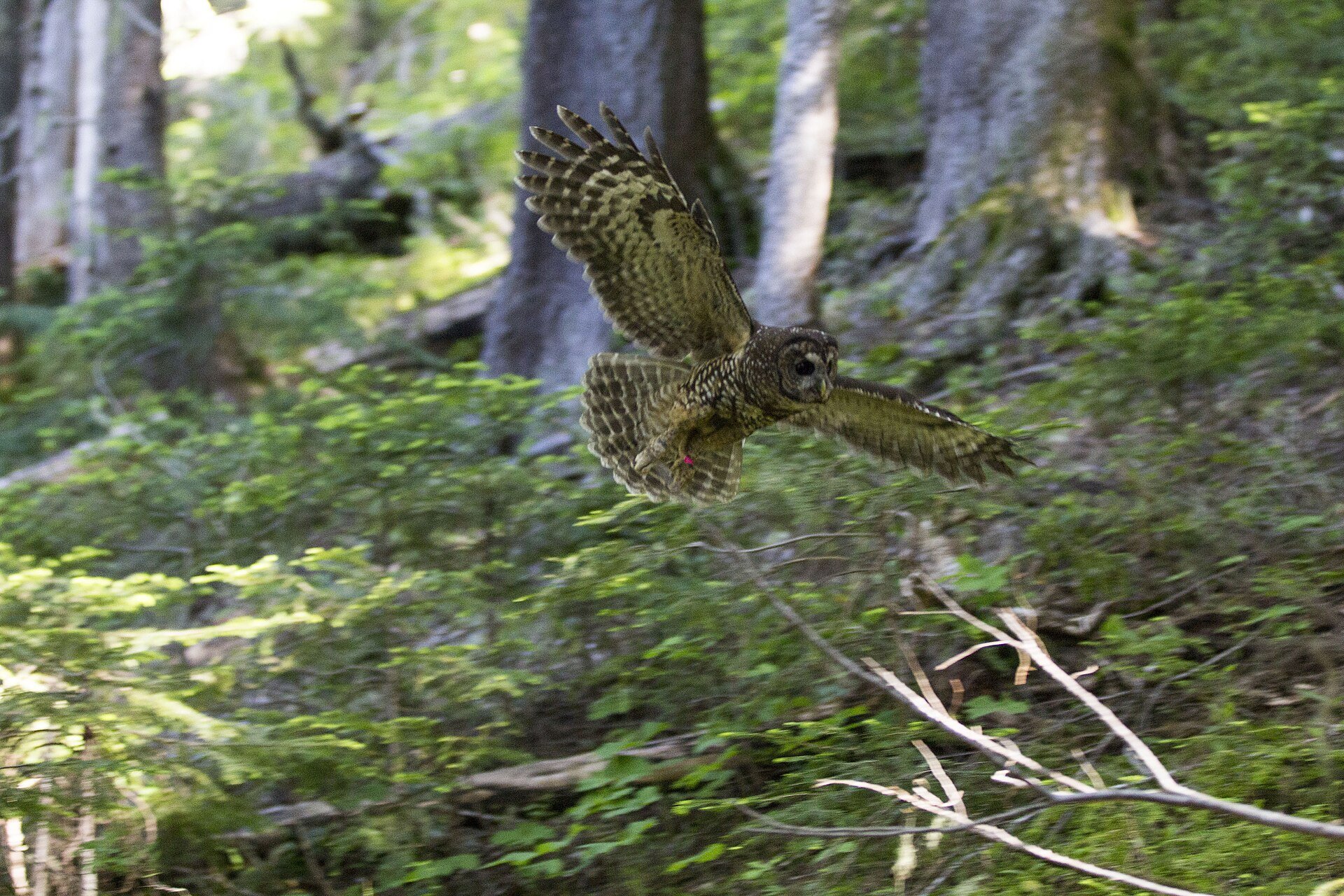
A northern spotted owl in flight through old-growth forest, wings spread.

Near Threatened (IUCN, species) / Threatened (ESA, subspecies)

Northern Spotted Owl

Strix occidentalis caurina

An old-growth forest owl still declining despite decades of logging restrictions, now displaced by the invading barred owl.

Region:
Pacific Northwest old-growth forest
Principal threat:
Competition from invading barred owls
View full profile →