Marine Life
Vaquita
Phocoena sinus
The world's most endangered marine mammal, reduced to about ten individuals by gillnets set for a different endangered species.
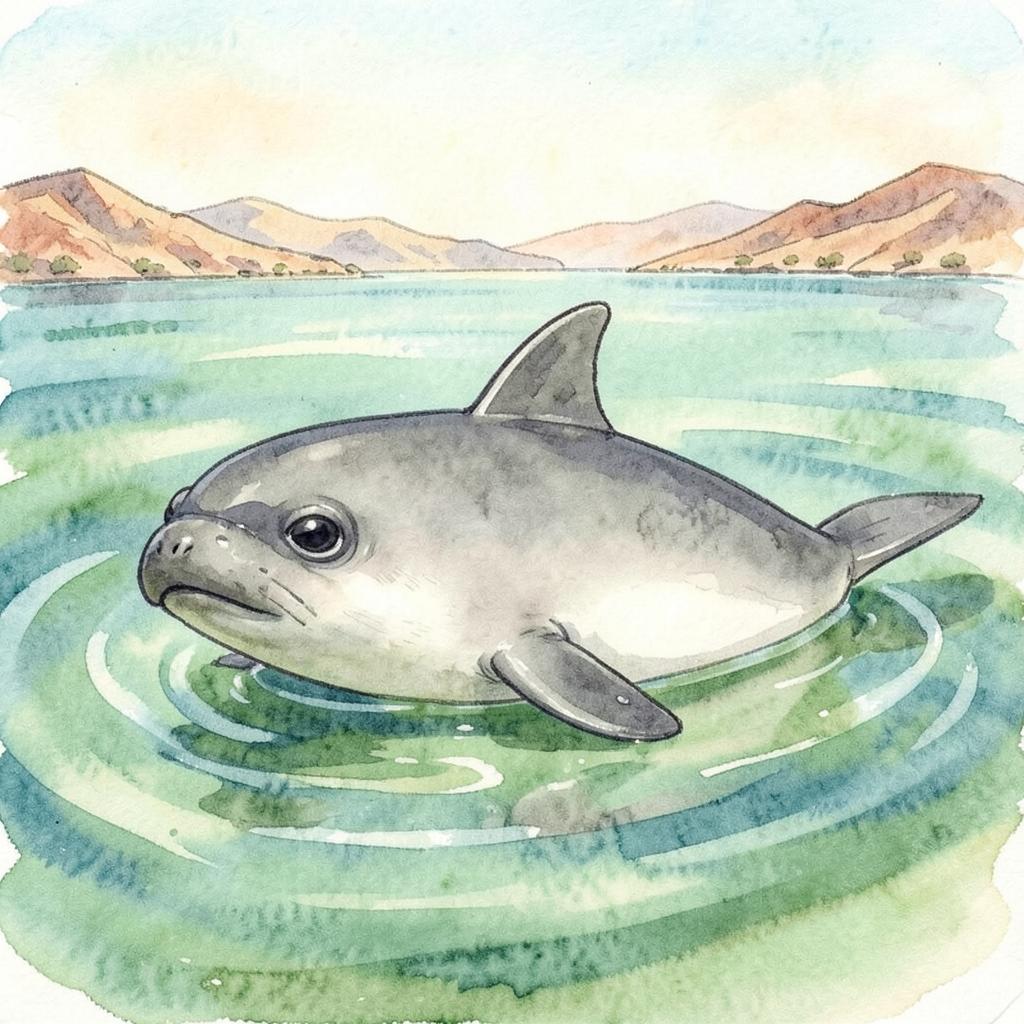
Illustrated Species Ambassador
Marina — Vaquita
I'm Marina, an illustrated ambassador for the vaquita. I am the smallest porpoise in the world, and I live in one small corner of one gulf.
- One fact worth knowing
- The vaquita is the world's most endangered marine mammal, reduced to roughly ten individuals by gillnets set illegally for a different endangered fish, the totoaba.
- What I depend on
- I depend on the shallow, turbid waters of the upper Gulf of California — and, more than anything, on the absence of gillnets.
- My greatest threat
- My greatest threat is entanglement in illegal totoaba gillnets.
- One way you can help
- Never purchase totoaba swim bladder, sometimes sold as fish maw, and support programs supplying alternative, gillnet-free gear to upper Gulf fishing communities.
This ambassador is an original illustration created for this project. It is an educational character, not a documentary image, and its statements follow the sourced record on this page. Artwork and rights record
Why this species matters
The vaquita is not hunted, not eaten, and not traded. It is dying entirely as bycatch in nets set for the totoaba, a fish whose swim bladder is trafficked to another country. It is the sharpest illustration anywhere that a species can be driven to extinction as a side effect of something unrelated.
If it disappears: It would be the second cetacean extinction caused by humans in modern times, after the baiji, and would occur in full view of an international recovery effort.
Cultural and regional note: Fishing communities in the upper Gulf depend on the same waters, and effective conservation has required addressing livelihoods alongside enforcement — a genuine and unresolved tension.
Conservation status
- IUCN Red List
- Critically EndangeredLast verified 2026-09-08
- CITES
- Appendix ILast verified 2026-09-08
- U.S. Endangered Species Act
- EndangeredLast verified 2026-09-08
- Mexico
- In danger of extinction under NOM-059Last verified 2026-09-08
Population
Roughly ten individuals, based on acoustic monitoring and visual survey. Recent survey efforts have consistently detected a small number of animals, including calves.
Trend: Decreasing
As reported: International Committee for the Recovery of the Vaquita survey reports, most recent seasons
Source: CIRVA / International Committee for the Recovery of the Vaquita; IUCN; NOAA Fisheries
Uncertainty: Estimates are published with wide confidence intervals because the population is so small. Encouragingly, calves have been observed in recent surveys, indicating the remaining animals are still reproducing.
Historical: Estimated at around 570 individuals in 1997 and about 245 in 2008.
Fragmentation: One population in one small area — the smallest range of any marine cetacean.
Range and distribution
Historic range: The northern Gulf of California, Mexico — the only place the species has ever occurred.
Current range: A small area of the northern Gulf, largely within a designated zero-tolerance enforcement zone.
Range contraction: Concentrated into a fraction of an already tiny range.
Regions occupied
- Northern Gulf of California (Sea of Cortez), Mexico
Habitat
Primary habitat: Shallow, turbid coastal waters generally less than 50 meters deep in the upper Gulf of California.
Breeding habitat: Calves are born in the same shallow coastal waters.
Feeding habitat: Feeds on small fish, squid, and crustaceans.
Critical habitat: A vaquita refuge and zero-tolerance zone have been designated by Mexico.
Habitat dependencies
- Absence of gillnets — this is effectively the only requirement
- Shallow, productive upper Gulf waters
Biology and ecology
A small coastal predator endemic to a single gulf.
Important adaptations: Distinctive dark eye and lip markings; adapted to warm, shallow, turbid water unlike most porpoises.
- Size
- About 4.5 to 5 feet — the smallest cetacean.
- Weight
- Roughly 65 to 120 pounds.
- Lifespan
- Around 20 years.
- Diet
- Small fish, squid, and crustaceans.
- Reproduction
- A single calf after roughly 10 to 11 months of gestation.
- Offspring
- One.
- Breeding frequency
- Estimated every one to two years.
- Age at maturity
- Around three to six years.
Primary threats
Bycatch
Gillnets set illegally for totoaba drown vaquitas. This single cause accounts for essentially all known mortality.
Wildlife trafficking
Totoaba swim bladders are trafficked to Asian markets at extremely high prices, driving persistent illegal fishing despite the ban.
Enforcement gaps
Illegal netting has continued inside the protected zone, though enforcement pressure has increased.
Extremely small population
At roughly ten animals, a single entanglement event is significant to the species.
Low genetic diversity
Genetic studies indicate the species has been naturally rare for a long time, though analysis suggests it may not be doomed by inbreeding alone if netting stops.
Captive care not viable
A 2017 capture attempt ended when a captured vaquita died, and captive conservation was abandoned as an option.
Conservation and recovery
Programs and efforts
- Mexican gillnet ban and zero-tolerance enforcement zone in the upper Gulf
- Net removal patrols by Sea Shepherd and Mexican authorities
- Acoustic monitoring network detecting vaquita clicks
- Alternative fishing gear development and fisher compensation programs
- CITES pressure and trade sanctions related to totoaba enforcement
Protected areas
- Upper Gulf of California and Colorado River Delta Biosphere Reserve
- Vaquita Refuge and zero-tolerance area
Legal protections
- CITES Appendix I for both vaquita and totoaba
- Mexican permanent gillnet ban in vaquita habitat
- U.S. import restrictions on Mexican seafood from the region
Measurable progress
- Recent surveys have detected calves, showing the remaining animals are still breeding
- Genetic analysis suggests the species could recover if net mortality stops
- Net removal operations have retrieved large numbers of illegal nets
Continuing challenges
- Totoaba trafficking remains highly profitable
- Enforcement in a remote marine area is difficult
- Fishing communities need viable alternatives
How people can help
What individuals can do
- Never purchase totoaba swim bladder, sometimes sold as maw or fish maw
- Choose seafood certified as gillnet-free and check sourcing from the Gulf of California
- Support organizations funding net removal and alternative gear
What communities can do
- Support trade enforcement and demand-reduction programs in consumer markets
Educational actions
- Use the vaquita to teach that bycatch — not hunting — is often the deadliest pressure on marine mammals
Habitat support
- Support alternative fishing gear programs for upper Gulf communities
Organizations and programs to learn about
- NOAA Fisheries
- Sea Shepherd Conservation Society
- IUCN SSC Cetacean Specialist Group
- Mexican environmental authorities
Educational notes
- Discovered by science in 1958 and possibly extinct within a single human lifetime.
- Not targeted by any fishery — every death is incidental.
Sources and references
- IUCN Red List — Phocoena sinus — IUCN
- NOAA Fisheries — Vaquita — NOAA Fisheries
- CITES Appendices — CITES