Urban Wildlife at Risk
Tricolored Bat
Perimyotis subflavus
One of the smallest bats in eastern North America, devastated by white-nose syndrome and proposed for federal endangered status.
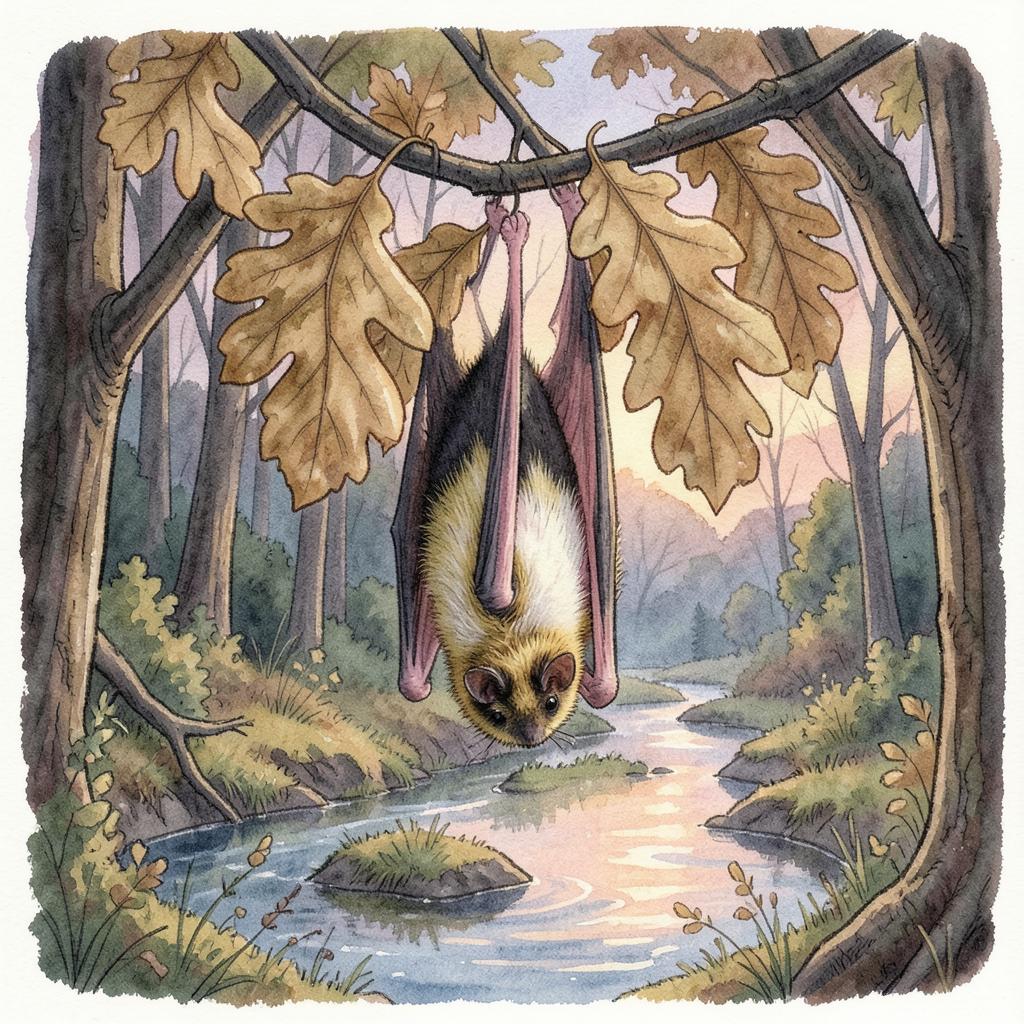
Illustrated Species Ambassador
Perry — Tricolored Bat
I'm Perry, an illustrated ambassador for the tricolored bat. I am one of the smallest bats in eastern North America, and my fur is banded in three shades.
- One fact worth knowing
- The tricolored bat has been devastated by white-nose syndrome and is proposed for federal endangered status.
- What I depend on
- I depend on warm, humid winter hibernation sites with very stable conditions, and on clusters of dead leaves and Spanish moss for summer roosts.
- My greatest threat
- My greatest threat is white-nose syndrome.
- One way you can help
- Observe cave closures and decontaminate gear between caves, and leave dead leaf clusters in trees where it is safe to do so — those are summer roosts.
This ambassador is an original illustration created for this project. It is an educational character, not a documentary image, and its statements follow the sourced record on this page. Artwork and rights record
Why this species matters
The tricolored bat hibernates alone in warm, humid spots — the conditions the white-nose fungus most favors. Its collapse across the eastern United States shows how a species' ordinary habits can become fatal when a new pathogen arrives.
If it disappears: Eastern forests and farmland would lose a substantial consumer of small flying insects, and one of the most widespread bats in the region.
Conservation status
- IUCN Red List
- VulnerableLast verified 2026-09-08
- U.S. Endangered Species Act
- Proposed for listing as EndangeredUSFWS proposed listing in 2022 and the final determination has been subject to extension; verify current status.Last verified 2026-09-08
- Canada (SARA)
- EndangeredLast verified 2026-09-08
- State
- Listed or of concern in many eastern statesLast verified 2026-09-08
Population
Hibernaculum counts across the affected range have declined by more than 90 percent at many monitored sites since white-nose syndrome arrived.
Trend: Decreasing
As reported: USFWS species status assessment and state hibernaculum surveys
Source: U.S. Fish and Wildlife Service; White-Nose Syndrome Response Team
Uncertainty: This species hibernates singly rather than in clusters, so counts require thorough searching and may undercount.
Historical: Formerly widespread and common across the eastern United States.
Fragmentation: Declines are severe wherever the fungus has arrived; portions of the southern and western range are less affected so far.
Range and distribution
Historic range: Eastern and central North America from southern Canada to Central America.
Current range: The same range, greatly reduced in the affected northeastern and midwestern portion.
Regions occupied
- Eastern United States
- Midwest and Texas
- Southeastern Canada
- Mexico and Central America
Habitat
Primary habitat: Forested landscapes with water; forages along forest edges and over streams.
Breeding habitat: Females roost in clusters of dead leaves in trees during summer, and in Spanish moss in the south.
Feeding habitat: Catches small flying insects along forest edges and waterways.
Seasonal differences: Hibernates in caves, mines, and, in the south, road culverts.
Habitat dependencies
- Warm, humid hibernacula with very stable conditions
- Foliage roosts — clusters of dead leaves and Spanish moss — for summer
- Forest edges and streams with abundant small insects
Biology and ecology
Consumes large numbers of small night-flying insects in forested and agricultural landscapes.
Important adaptations: Named for the three color bands on each individual hair. Hibernates singly and remains motionless for so long that condensation droplets collect on its fur, which is how the species is often recognized in caves.
- Size
- About 3 inches long with an 8 to 10 inch wingspan.
- Weight
- Roughly 4 to 8 grams — one of the smallest bats in North America.
- Lifespan
- Up to about 15 years.
- Diet
- Small flying insects — flies, beetles, moths, and leafhoppers.
- Reproduction
- Mates in autumn with delayed fertilization; gives birth in early summer.
- Offspring
- Usually twins, unlike most North American bats.
- Breeding frequency
- Once yearly.
- Age at maturity
- Females often in their first year.
Primary threats
Disease
White-nose syndrome has caused declines exceeding 90 percent at many monitored hibernacula.
Human disturbance
Disturbance during hibernation causes bats to burn fat reserves they cannot replace in winter.
Wind turbines
Turbine mortality affects this species during migration and dispersal.
Habitat loss
Forest clearing removes summer foliage roosts and foraging edges.
Culvert modification
In the south, culverts used as hibernacula are cleaned, sealed, or replaced.
Pesticides
Insecticide use reduces prey and may cause direct exposure.
Climate change
Changing humidity and temperature in hibernacula affect both bats and fungal growth.
Conservation and recovery
Programs and efforts
- National White-Nose Syndrome Response Team research and management
- Hibernaculum protection, gating, and seasonal closure
- Decontamination protocols for cave visitors and researchers
- Culvert survey and protection programs in southern states
- Wind energy operational curtailment during high-risk periods
Protected areas
- Gated cave and mine hibernacula across the eastern United States
- National forest and park cave systems
Legal protections
- Proposed ESA endangered listing
- Canadian Species at Risk Act
- State listings
- Federal cave closure orders
Measurable progress
- Some southern populations remain relatively stable
- Curtailment agreements at wind facilities have reduced bat mortality where implemented
Continuing challenges
- The fungus persists in caves indefinitely
- Twins per year is still slow recovery after a 90 percent loss
- Culvert hibernacula are largely unprotected
How people can help
What individuals can do
- Observe cave closures and decontaminate gear between caves
- Leave leaf clusters and dead foliage in trees where safe — these are summer roosts
- Exclude bats from buildings only outside the maternity season, and provide a bat house first
What communities can do
- Survey and protect road culverts used as winter roosts before maintenance work
- Support wind energy curtailment agreements
Educational actions
- Use the condensation droplets on hibernating tricolored bats to teach just how deeply they shut down in winter
Habitat support
- Maintain forested stream corridors and edge habitat
Organizations and programs to learn about
- Bat Conservation International
- USFWS
- state wildlife agencies
- White-Nose Syndrome Response Team
Educational notes
- Named for the three color bands on each individual hair.
- One of the few North American bats that regularly has twins.
- Hibernates so deeply that water droplets condense on its fur.
Sources and references
- IUCN Red List — Perimyotis subflavus — IUCN
- U.S. Fish and Wildlife Service — Tricolored Bat — USFWS
- White-Nose Syndrome Response Team — USFWS and partners