Plants
Texas Snowbells
Styrax platanifolius ssp. texanus
A flowering shrub clinging to limestone canyon walls in the Texas Hill Country, surviving mainly where livestock and deer cannot reach it.
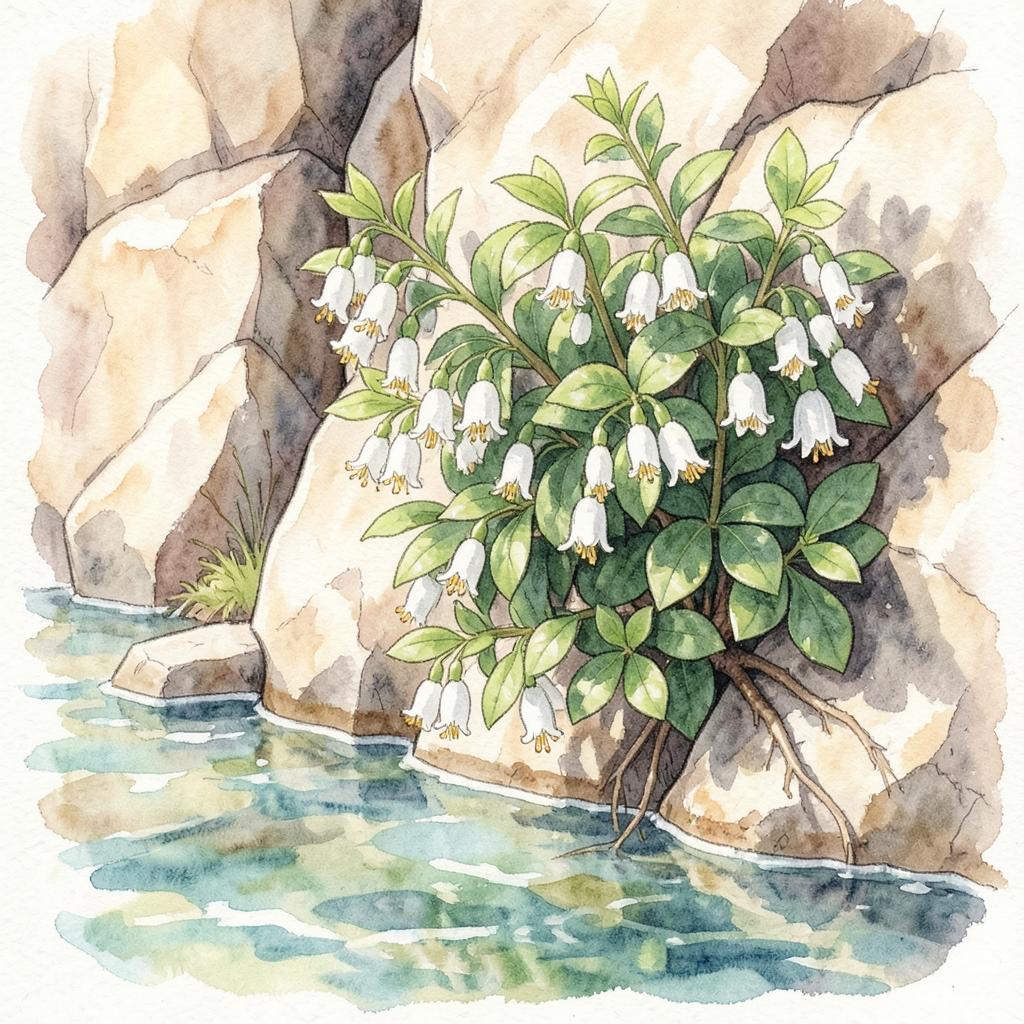
Illustrated Species Ambassador
Nueces — Texas Snowbells
I'm Nueces, an illustrated ambassador for Texas snowbells. My white bell flowers hang from limestone canyon walls above Hill Country streams.
- One fact worth knowing
- Texas snowbells survives mainly on canyon walls and bluffs where livestock and deer cannot reach it, because browsing prevents young plants from replacing old ones.
- What I depend on
- I depend on limestone crevices to root in, periodic moisture in canyon drainages, and protection from browsing while I am a seedling or sapling.
- My greatest threat
- My greatest threat is browsing by deer and livestock, which prevents regeneration.
- One way you can help
- If you own Hill Country land in the range, ask Texas Parks and Wildlife about planting programs and manage deer and livestock densities so native shrubs can regenerate.
This ambassador is an original illustration created for this project. It is an educational character, not a documentary image, and its statements follow the sourced record on this page. Artwork and rights record
Why this species matters
Texas snowbells survives almost exclusively where goats and deer cannot climb. The plant is not rare because of where it likes to grow; it is rare because that is the only place left that browsing has not reached. Its recovery has been driven almost entirely by private ranchers agreeing to plant and protect it.
If it disappears: The Hill Country would lose a distinctive endemic flowering shrub, and one of the clearest demonstrations that private land conservation can recover a species.
Conservation status
- U.S. Endangered Species Act
- EndangeredListed 1984.Last verified 2026-09-08
- Texas
- State endangeredLast verified 2026-09-08
- NatureServe
- Critically ImperiledLast verified 2026-09-08
Population
Fewer than a thousand naturally occurring plants across a small number of canyon drainages, supplemented by several thousand propagated plants established through private landowner planting programs.
Trend: Increasing
As reported: USFWS five-year review and Texas Parks and Wildlife monitoring
Source: U.S. Fish and Wildlife Service; Texas Parks and Wildlife Department
Uncertainty: Distinguish wild plants from established plantings. Recovery reporting counts both, which can overstate the naturally occurring population if not read carefully.
Historical: Believed to have been more widespread in Edwards Plateau canyon systems before intensive grazing.
Fragmentation: Populations occur in separate canyon drainages, mostly on private ranchland.
Range and distribution
Historic range: Limestone canyons of the western Edwards Plateau in Texas.
Current range: Edwards, Real, Val Verde, Kinney, and Uvalde counties, Texas.
Range contraction: Reduced to inaccessible cliff positions in most drainages.
Regions occupied
- Western Edwards Plateau, Texas — Nueces, Devils, and West Nueces river drainages
Habitat
Primary habitat: Limestone canyon walls, bluffs, and rocky streambeds in the Hill Country.
Breeding habitat: Produces clusters of white, bell-shaped, fragrant flowers in spring, followed by seed.
Feeding habitat: Autotrophic; roots directly into limestone crevices.
Critical habitat: No critical habitat designated.
Habitat dependencies
- Limestone substrate with crevices for rooting
- Protection from browsing during the seedling and sapling stage
- Periodic moisture in canyon drainages
Biology and ecology
Provides nectar for pollinators and structure on canyon walls in an otherwise sparse habitat.
Important adaptations: Roots into vertical limestone crevices, a position that also happens to be the only place browsing animals cannot reach.
- Size
- A shrub or small tree, typically 6 to 20 feet tall.
- Lifespan
- Long-lived perennial woody plant.
- Diet
- Autotrophic.
- Reproduction
- Insect-pollinated flowers producing seed; natural seedling establishment is rare because seedlings are browsed.
- Offspring
- Seed production can be good, but recruitment to adulthood is extremely limited.
- Breeding frequency
- Flowers annually in spring.
Primary threats
Overgrazing
Goats, sheep, cattle, and high white-tailed deer densities eat seedlings and saplings, so plants only survive where animals cannot reach them.
Small population size
Few naturally occurring plants means limited genetic diversity and high vulnerability.
Drought
Extended Hill Country drought stresses plants and reduces seedling survival.
Habitat loss
Ranchland subdivision and development fragment canyon habitat.
Flooding
Flash floods in canyon drainages can destroy plants growing in streambeds.
Collection
Rarity creates some risk of illegal collection of a horticulturally attractive plant.
Conservation and recovery
Programs and efforts
- USFWS recovery program in partnership with private landowners
- Propagation and outplanting programs, including work led by ranchers and native plant specialists
- Caging and fencing of planted individuals until they grow above browse height
- Safe harbor agreements and conservation easements with Hill Country ranchers
- Seed banking and horticultural propagation
Protected areas
- Devils River State Natural Area
- Private ranch conservation easements in the western Edwards Plateau
Legal protections
- Endangered Species Act
- Texas state endangered listing
Measurable progress
- Thousands of propagated plants have been established on private ranches, substantially increasing the total population
- Landowner-led propagation showed that recovery could proceed without regulatory conflict
Continuing challenges
- Naturally occurring plants remain few
- Deer densities remain high across the Hill Country
- Recovery depends on sustained landowner participation
How people can help
What individuals can do
- If you own Hill Country land in the range, contact Texas Parks and Wildlife about participating in planting programs
- Manage deer and livestock densities to allow native shrub regeneration
- Never collect wild plants or seed
What communities can do
- Support conservation easements protecting canyon habitat
- Encourage native plant nurseries to propagate regional species properly
Educational actions
- Use this species to teach that browsing pressure alone can endanger a plant, without any habitat being destroyed
Habitat support
- Support riparian and canyon habitat protection on the Devils and Nueces river systems
Organizations and programs to learn about
- Texas Parks and Wildlife Department
- USFWS Austin Ecological Services Field Office
- Lady Bird Johnson Wildflower Center
Educational notes
- A species saved largely by private ranchers rather than public land protection.
- It grows on cliffs not by preference but because that is where browsing animals cannot reach.
Sources and references
- U.S. Fish and Wildlife Service — Texas Snowbells — USFWS
- Texas Parks and Wildlife Department — Texas Snowbells — TPWD
- Lady Bird Johnson Wildflower Center — Native Plant Database — Lady Bird Johnson Wildflower Center