Reptiles and Amphibians
Kemp's Ridley Sea Turtle
Lepidochelys kempii
The world's smallest and most endangered sea turtle, nesting almost entirely on a short stretch of Gulf coastline in Mexico and Texas.
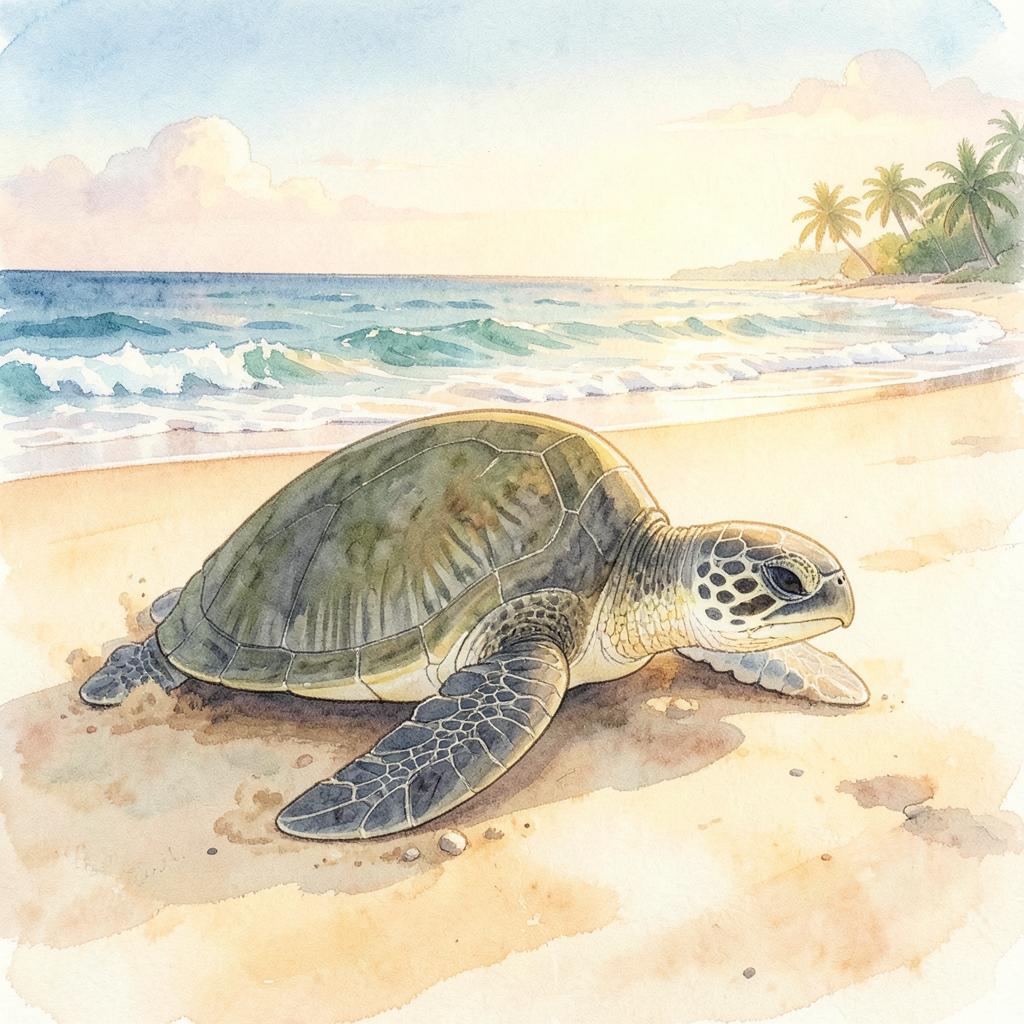
Illustrated Species Ambassador
Padre — Kemp's Ridley Sea Turtle
I'm Padre, an illustrated ambassador for Kemp's ridley sea turtle. I am the smallest sea turtle, and I nest in daylight, together with hundreds of others.
- One fact worth knowing
- Kemp's ridleys nest in synchronised mass arrivals called arribadas, mostly on a small stretch of the western Gulf of Mexico coast — the most geographically concentrated nesting of any sea turtle.
- What I depend on
- I depend on shallow Gulf waters with crab-rich sandy and muddy bottoms, and on undisturbed nesting beaches on the Texas and Tamaulipas coast.
- My greatest threat
- My greatest threat is drowning as bycatch in shrimp trawls and other fishing gear.
- One way you can help
- Report nesting turtles and stranded turtles on the Texas coast to the sea turtle hotline, keep off marked nest areas, and support the required use of turtle excluder devices in shrimp fisheries.
This ambassador is an original illustration created for this project. It is an educational character, not a documentary image, and its statements follow the sourced record on this page. Artwork and rights record
Why this species matters
Nearly the entire future of this species depends on a short stretch of Gulf coastline. That concentration makes it fragile, but it also means careful work on a handful of beaches and fishing practices produces measurable results.
If it disappears: Extinction would remove a principal predator of Gulf crabs, end the western Atlantic's only arribada-nesting turtle, and undo one of the longest-running binational recovery partnerships in conservation.
Conservation status
- IUCN Red List
- Critically EndangeredLast verified 2026-09-08
- U.S. Endangered Species Act
- EndangeredListed 1970; jointly managed by USFWS and NOAA Fisheries.Last verified 2026-09-08
- CITES
- Appendix ILast verified 2026-09-08
- Mexico (NOM-059)
- In danger of extinctionLast verified 2026-09-08
Population
Nesting has plateaued well below recovery targets; annual nest counts at Rancho Nuevo and associated Mexican beaches have run in the range of roughly 8,000–12,000 nests in recent years, with a few hundred nests on Texas beaches.
Trend: Unknown
As reported: NOAA Fisheries and Gladys Porter Zoo nesting-season reporting, 2010s–2020s
Source: NOAA Fisheries; U.S. Fish and Wildlife Service; Mexican nesting beach monitoring
Uncertainty: Nest counts rose steeply through 2009, then dropped and have fluctuated without a clear direction since. Sources differ on whether the population is stable or declining, and that disagreement is unresolved.
Historical: A 1947 film recorded an estimated 40,000 nesting females in a single day at Rancho Nuevo; by the mid-1980s, annual nesting had fallen to a few hundred nests.
Range and distribution
Historic range: Gulf of Mexico with juveniles dispersing up the Atlantic seaboard.
Current range: Same, with nesting concentrated at Rancho Nuevo, Tamaulipas, and a secondary population on the Texas coast.
Migration: Juveniles ride Gulf and Atlantic currents north; adults return to natal nesting beaches.
Range contraction: Nesting is concentrated on a handful of beaches, leaving the species highly exposed to a single localized disaster.
Regions occupied
- Tamaulipas and Veracruz, Mexico
- Texas Gulf Coast
- Gulf of Mexico
- U.S. Atlantic coast to New England (juveniles)
Habitat
Primary habitat: Shallow, warm coastal waters with sandy and muddy bottoms where crabs are abundant.
Breeding habitat: Open Gulf beaches, often in mass daytime nesting events called arribadas.
Feeding habitat: Nearshore crab beds, especially blue crab habitat.
Critical habitat: Critical habitat has been designated for the species in U.S. Gulf waters.
Habitat dependencies
- Undeveloped, dark nesting beaches
- Healthy nearshore crab populations
- Fishing gear fitted with turtle excluder devices
Biology and ecology
A major nearshore predator of crabs, and a nutrient link between ocean and beach through its eggs.
Important adaptations: Synchronized mass nesting overwhelms predators so a portion of eggs survive.
- Size
- Shell length about 24–28 inches — the smallest sea turtle.
- Weight
- Roughly 75–100 pounds.
- Lifespan
- Estimated around 30–50 years.
- Diet
- Primarily crabs, with mollusks, shrimp, jellyfish, and fish.
- Reproduction
- Nests in daytime arribadas; females return to natal beaches.
- Offspring
- Roughly 100 eggs per clutch, with two to three clutches in a nesting year.
- Breeding frequency
- Females typically nest every one to three years.
- Age at maturity
- About 10–15 years.
Primary threats
Bycatch
Incidental capture and drowning in shrimp trawls and other fishing gear remains the single largest threat.
Habitat loss
Beach development and shoreline armoring reduce and degrade nesting beaches.
Pollution
The 2010 Deepwater Horizon oil spill affected Gulf foraging habitat during a critical recovery period.
Plastic debris
Ingestion of and entanglement in plastic and derelict fishing gear kills turtles of all ages.
Vessel strikes
Boat propeller injuries are a routine cause of stranding in nearshore waters.
Cold stunning
Sudden cold snaps in shallow bays immobilize turtles, requiring mass rescue efforts.
Light pollution
Beachfront lighting disorients hatchlings and draws them away from the water.
Conservation and recovery
Programs and efforts
- Binational Mexico-United States Kemp's ridley recovery program dating to 1978
- Turtle excluder device requirements in U.S. shrimp fisheries
- Padre Island National Seashore nest detection, incubation, and hatchling release program
- Cold-stunning rescue and rehabilitation networks in Texas and the northeastern U.S.
Protected areas
- Rancho Nuevo Sanctuary, Tamaulipas
- Padre Island National Seashore
- Texas Gulf Coast national wildlife refuges
Legal protections
- Endangered Species Act
- CITES Appendix I
- Mexican federal protection of nesting beaches
- Marine Mammal and fisheries gear regulations
Measurable progress
- Nesting increased from a few hundred nests in the mid-1980s to over 20,000 nests in 2009
- Turtle excluder devices measurably reduced trawl mortality
Continuing challenges
- Nesting has not resumed its earlier growth
- Gulf industrial activity continues
- Recovery depends on sustained enforcement in two countries
How people can help
What individuals can do
- Keep beaches clean and remove plastic and fishing line from the shoreline
- Turn off or shield beachfront lighting during nesting and hatching season
- Never disturb nests, hatchlings, or nesting females; report them to local patrols
- Report stranded or cold-stunned turtles to the state stranding hotline
What communities can do
- Support turtle excluder device enforcement and responsible seafood sourcing
- Back dark-sky lighting ordinances in beach communities
Educational actions
- Attend a public hatchling release at Padre Island National Seashore
Habitat support
- Join beach cleanups and dune restoration before nesting season
Organizations and programs to learn about
- NOAA Fisheries
- Padre Island National Seashore Sea Turtle Science and Recovery
- Gladys Porter Zoo
Educational notes
- Good for teaching how one change in industry practice can lift an entire species.
- Pairs naturally with a beach or waterway cleanup service project.
Sources and references
- IUCN Red List — Lepidochelys kempii — IUCN
- U.S. Fish and Wildlife Service — Kemp's Ridley Sea Turtle — USFWS
- NOAA Fisheries — Kemp's Ridley Turtle — NOAA Fisheries
- Padre Island National Seashore — Sea Turtle Science and Recovery — National Park Service