Reptiles and Amphibians
Hawksbill Sea Turtle
Eretmochelys imbricata
A coral reef turtle hunted for centuries for its patterned shell, sold as tortoiseshell, and still critically endangered worldwide.
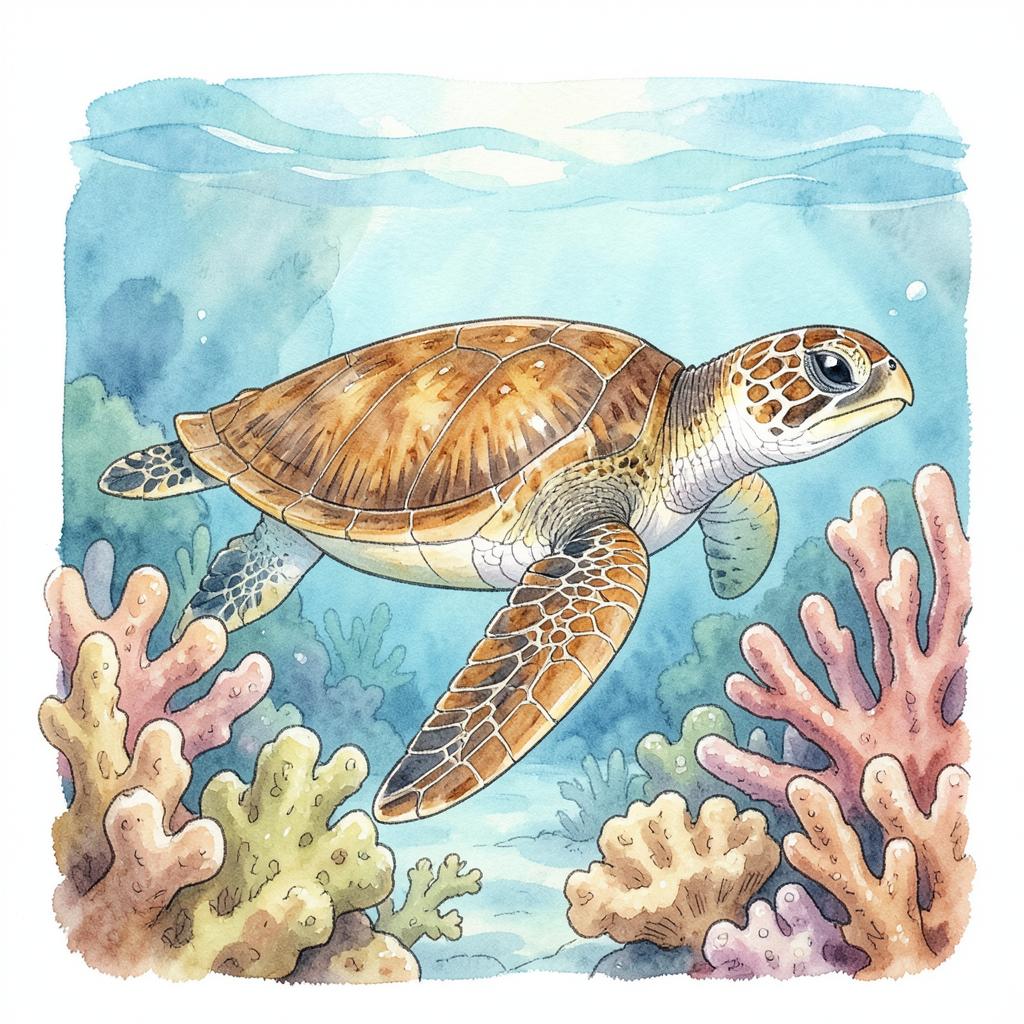
Illustrated Species Ambassador
Amber — Hawksbill Sea Turtle
I'm Amber, an illustrated ambassador for the hawksbill sea turtle. My shell is the reason I was hunted for centuries. It was sold as tortoiseshell.
- One fact worth knowing
- The hawksbill is one of very few animals that eats sponges in quantity, which stops sponges from crowding reef-building corals out of space.
- What I depend on
- I depend on healthy sponge-bearing coral reefs and on small undisturbed nesting beaches.
- My greatest threat
- My greatest threats are the shell trade and the loss of coral reefs.
- One way you can help
- Never buy tortoiseshell — if a souvenir looks like polished turtle shell, assume that is what it is — and use reef-safe sunscreen without touching or standing on coral.
This ambassador is an original illustration created for this project. It is an educational character, not a documentary image, and its statements follow the sourced record on this page. Artwork and rights record
Why this species matters
Hawksbills keep sponges in check so corals can hold their place on the reef. Removing them changes the reef itself — this is a species whose feeding habit maintains a habitat that thousands of other species depend on.
If it disappears: Sponge overgrowth would accelerate coral reef decline, compounding losses already driven by warming and bleaching.
Cultural and regional note: Tortoiseshell from hawksbill scutes was traded for centuries for combs, jewelry, and inlay; CITES prohibits this trade internationally, but illegal sales persist in tourist markets.
Conservation status
- IUCN Red List
- Critically EndangeredLast verified 2026-09-08
- U.S. Endangered Species Act
- EndangeredListed 1970.Last verified 2026-09-08
- CITES
- Appendix ILast verified 2026-09-08
Population
Global nesting is estimated in the range of roughly 20,000–25,000 nesting females, with a documented global decline exceeding 80 percent over three generations.
Trend: Decreasing
As reported: IUCN Red List assessment; NOAA Fisheries status reporting
Source: IUCN Red List; NOAA Fisheries
Uncertainty: Sea turtle populations are counted as nesting females rather than total individuals, because males and juveniles are not reliably countable.
Historical: Millions of hawksbills were killed for the tortoiseshell trade over several centuries, with Japan alone importing shell from hundreds of thousands of turtles in the twentieth century.
Fragmentation: Some regional nesting populations are increasing while others continue to decline.
Range and distribution
Historic range: Tropical and subtropical reefs of the Atlantic, Indian, and Pacific Oceans.
Current range: Same broad range with sharply reduced numbers and lost nesting beaches.
Migration: Long-distance movement between foraging reefs and nesting beaches.
Range contraction: Extirpated from a number of historic nesting beaches.
Regions occupied
- Caribbean
- Gulf of Mexico
- Western Atlantic
- Indo-Pacific
- Indian Ocean
- Coral Triangle
Habitat
Primary habitat: Coral reefs, rocky outcrops, and sponge-rich hard-bottom habitat.
Breeding habitat: Nests on small, sandy tropical beaches, often under vegetation.
Feeding habitat: Feeds on sponges within reef systems.
Critical habitat: Critical habitat designated around Mona and Monito Islands, Puerto Rico.
Habitat dependencies
- Healthy sponge-bearing coral reefs
- Undisturbed small nesting beaches
Biology and ecology
One of the few animals that eats sponges in quantity, preventing sponges from outcompeting reef-building corals for space.
Important adaptations: Narrow, hawk-like beak for extracting sponges from reef crevices; overlapping, patterned scutes.
- Size
- Shell length about 25–35 inches.
- Weight
- Roughly 100–150 pounds.
- Lifespan
- Estimated 50 years or more.
- Diet
- Primarily sponges, along with anemones, jellyfish, and algae.
- Reproduction
- Nests at night on tropical beaches.
- Offspring
- Roughly 130–160 eggs per clutch, several clutches in a nesting season.
- Breeding frequency
- Nests every two to four years.
- Age at maturity
- Estimated 20–35 years.
Primary threats
Illegal wildlife trade
Shell is still sold as tortoiseshell jewelry and curios despite an international ban.
Habitat loss
Coral reef degradation and bleaching remove the sponge-rich habitat hawksbills feed in.
Bycatch
Entanglement in gillnets, longlines, and trap lines drowns turtles of all ages.
Egg harvest
Nest poaching continues in several range countries.
Plastic debris
Ingestion and entanglement kill turtles and hatchlings.
Coastal development
Beach construction and lighting eliminate and disorient nesting activity.
Ocean warming
Warmer sand skews hatchling sex ratios toward females, and warming drives coral bleaching.
Conservation and recovery
Programs and efforts
- CITES Appendix I prohibition on international shell trade
- NOAA Fisheries and USFWS joint recovery plans for Atlantic and Pacific populations
- Nesting beach patrols and hatchery programs across the Caribbean and Indo-Pacific
- Reef protection and marine protected area networks
Protected areas
- Mona and Monito Islands, Puerto Rico
- Buck Island Reef National Monument
- Great Barrier Reef Marine Park
- Caribbean marine protected areas
Legal protections
- Endangered Species Act
- CITES Appendix I
- National protection across most range states
Measurable progress
- Some Caribbean and Indian Ocean nesting populations have increased under sustained beach protection
- Japan ended legal tortoiseshell imports in the 1990s
Continuing challenges
- Persistent illegal shell markets
- Coral reef decline is accelerating
- Long maturation means recovery takes decades
How people can help
What individuals can do
- Never buy tortoiseshell products; if a souvenir looks like polished turtle shell, assume it is
- Use reef-safe sunscreen and avoid touching or standing on coral
- Report nesting turtles and disoriented hatchlings rather than intervening
What communities can do
- Support marine protected areas and reef restoration
- Back dark-sky beachfront lighting rules
Educational actions
- Teach travelers to recognize and refuse tortoiseshell items
Habitat support
- Support coral reef restoration and water quality improvement near reefs
Organizations and programs to learn about
- NOAA Fisheries
- IUCN SSC Marine Turtle Specialist Group
- regional sea turtle conservation networks
Educational notes
- A species whose diet — sponges — is what makes it ecologically essential.
- Connects tourism purchasing decisions directly to a critically endangered animal.
Sources and references
- IUCN Red List — Eretmochelys imbricata — IUCN
- NOAA Fisheries — Hawksbill Turtle — NOAA Fisheries
- U.S. Fish and Wildlife Service — Hawksbill Sea Turtle — USFWS