Reptiles and Amphibians
Gopher Tortoise
Gopherus polyphemus
A keystone burrowing tortoise of southeastern pine uplands whose burrows shelter hundreds of other species.
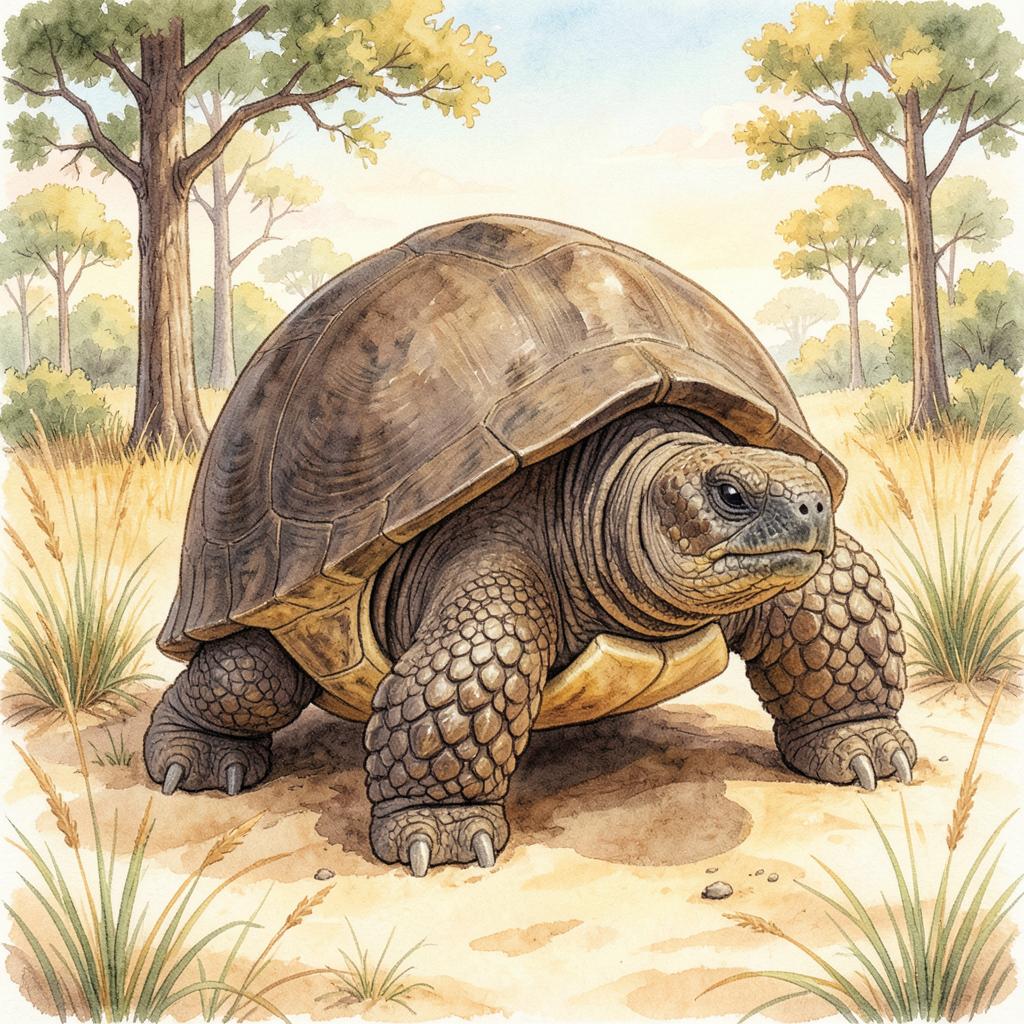
Illustrated Species Ambassador
Warren — Gopher Tortoise
I'm Warren, an illustrated ambassador for the gopher tortoise. I dig, and because I dig, a great many other animals have somewhere to live.
- One fact worth knowing
- Gopher tortoise burrows can exceed 30 feet long and shelter more than 350 other species, including indigo snakes, gopher frogs and burrowing owls.
- What I depend on
- I depend on deep sandy soil I can dig in, open sunlit ground kept clear by fire, and plenty of low herbaceous plants to eat.
- My greatest threat
- My greatest threat is the development of sandhill and pine upland habitat.
- One way you can help
- Never move a tortoise except out of a road in the direction it was heading, never keep one as a pet, and report burrows on land due to be cleared so tortoises can be relocated legally.
This ambassador is an original illustration created for this project. It is an educational character, not a documentary image, and its statements follow the sourced record on this page. Artwork and rights record
Why this species matters
More than 350 species use gopher tortoise burrows. Protecting one slow-moving reptile effectively protects an entire underground community that has no other shelter when fire moves through.
If it disappears: Burrow-dependent species — including the threatened eastern indigo snake and gopher frog — would lose their refuge, and southeastern sandhill ecosystems would lose their principal engineer.
Conservation status
- IUCN Red List
- VulnerableLast verified 2026-09-08
- U.S. Endangered Species Act
- Threatened in the western portion of its range (Louisiana, Mississippi, and western Alabama)In 2022 USFWS found listing the eastern population not warranted; the western population remains listed as threatened.Last verified 2026-09-08
- Florida
- Threatened (state listed)Last verified 2026-09-08
- Georgia and Alabama
- State protectedLast verified 2026-09-08
Population
Hundreds of thousands of tortoises remain range-wide, but the species has declined by an estimated 80 percent or more from historic numbers and continues to lose habitat.
Trend: Decreasing
As reported: USFWS species status assessment, 2022
Source: U.S. Fish and Wildlife Service; Florida Fish and Wildlife Conservation Commission
Uncertainty: Population is described in terms of occupied habitat and burrow surveys rather than a precise count.
Fragmentation: Many remaining groups are too small and isolated to persist long term without relocation or corridor connection.
Range and distribution
Historic range: Sandy uplands of the southeastern coastal plain from South Carolina to eastern Louisiana.
Current range: Same states with heavily fragmented occupancy; Florida and Georgia hold the largest numbers.
Range contraction: Longleaf pine uplands, its core habitat, have been reduced to a small fraction of historic extent.
Regions occupied
- Florida
- Georgia
- South Carolina
- Alabama
- Mississippi
- Louisiana
Habitat
Primary habitat: Well-drained sandy uplands: longleaf pine sandhills, scrub, and dry hammock.
Breeding habitat: Nests in the sandy apron at the mouth of its own burrow.
Feeding habitat: Grazes on low-growing grasses, legumes, and forbs in sunlit openings.
Critical habitat: Critical habitat has been proposed for the listed western population.
Habitat dependencies
- Deep, diggable sandy soil
- Open sunlit ground layer maintained by fire
- Abundant low herbaceous forage
Biology and ecology
A keystone species: its burrows, which can exceed 30 feet long, shelter more than 350 other species including indigo snakes, gopher frogs, burrowing owls, and countless invertebrates.
Important adaptations: Shovel-like front limbs for digging; burrows buffer temperature and provide refuge from fire.
- Size
- Shell length about 9–15 inches.
- Weight
- Roughly 8–15 pounds.
- Lifespan
- 40–60 years or more in the wild.
- Diet
- Grasses, legumes, prickly pear, and fallen fruit.
- Reproduction
- Lays eggs in the burrow apron where sun-warmed sand incubates them.
- Offspring
- Typically 5–9 eggs.
- Breeding frequency
- One clutch a year, and many clutches are lost to predators.
- Age at maturity
- 10–20 years, one of the slowest maturation rates of any North American reptile.
Primary threats
Habitat loss
Residential and commercial development on sandy uplands is the leading cause of decline.
Fire suppression
Without fire, the understory closes and the low forage plants tortoises graze disappear.
Habitat fragmentation
Roads and subdivisions isolate small groups below viable size.
Road mortality
Slow-moving tortoises are frequently killed crossing roads.
Illegal collection
Tortoises are taken as pets and, historically, for food.
Burial during development
Tortoises were historically entombed in burrows during land clearing; relocation permits now address this.
Disease
Upper respiratory tract disease can spread through populations, especially after relocations.
Conservation and recovery
Programs and efforts
- State relocation and recipient-site programs, especially in Florida
- Prescribed fire and longleaf pine restoration
- USFWS listing and recovery work for the western population
- Gopher Tortoise Council range-wide coordination
Protected areas
- Apalachicola National Forest
- Camp Blanding, Florida
- Georgia and Florida state wildlife management areas
- Longleaf pine conservation lands
Legal protections
- Endangered Species Act (western population)
- State protections in all six range states
- Permitting requirements before land clearing in occupied habitat
Measurable progress
- Tens of thousands of tortoises relocated to protected recipient sites in Florida
- Large-scale longleaf pine restoration is underway across the southeast
Continuing challenges
- Development pressure continues
- Slow maturation limits recovery speed
- Relocation can spread disease if not carefully managed
How people can help
What individuals can do
- Never move a tortoise except out of a road, in the direction it was already heading
- Never keep a gopher tortoise as a pet — it is illegal throughout the range
- Report burrows on land slated for clearing so tortoises can be legally relocated
What communities can do
- Support prescribed burning and recipient-site programs
- Back development permitting that requires burrow surveys
Educational actions
- Use the burrow's 350-plus commensal species to teach keystone ecology
Habitat support
- Maintain open, sunny, grassy ground layers on sandy property; avoid dense sod and heavy landscaping
Organizations and programs to learn about
- Gopher Tortoise Council
- Florida Fish and Wildlife Conservation Commission
- The Longleaf Alliance
Educational notes
- One of the clearest keystone species examples in North America.
- Shows how a single land-clearing decision can eliminate an entire underground community.