Urban Wildlife at Risk
Chimney Swift
Chaetura pelagica
A bird that gave up hollow trees for masonry chimneys, and is now declining as those chimneys are capped, lined, and demolished.
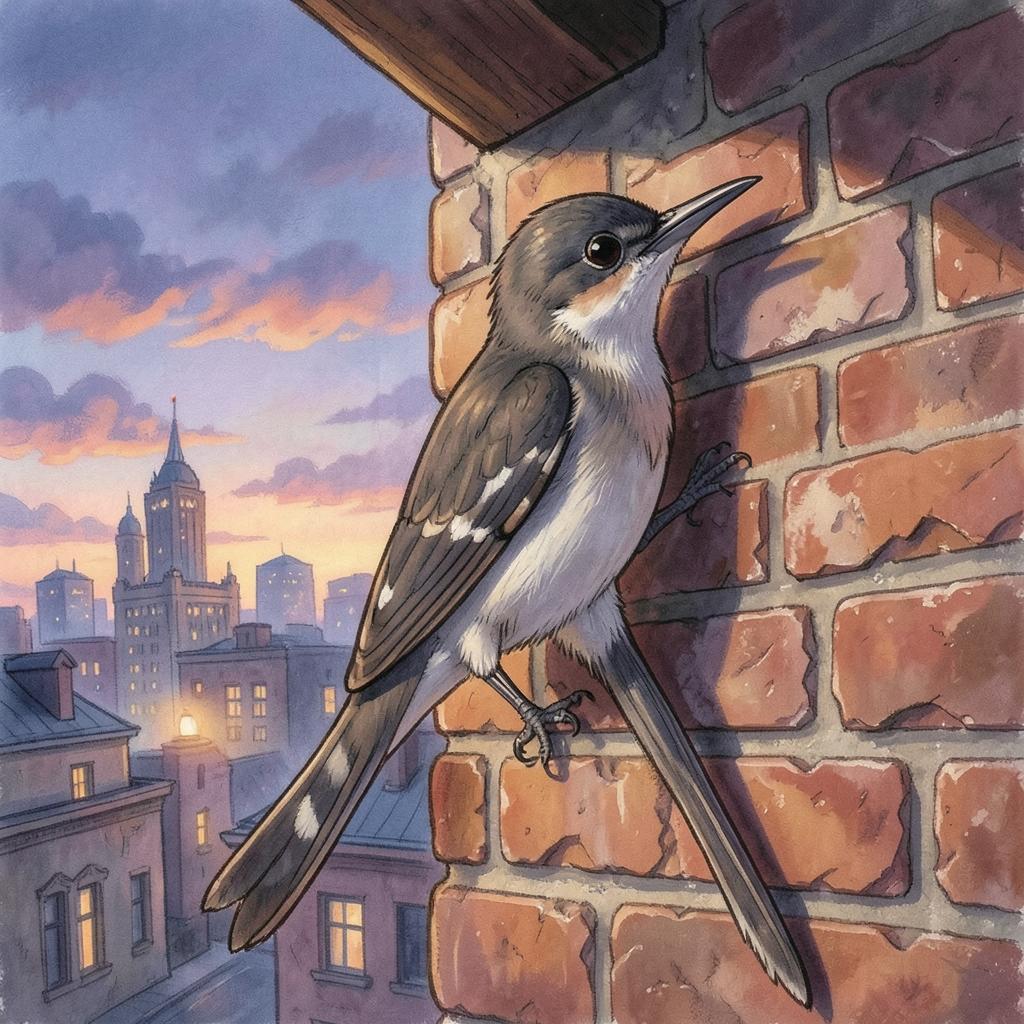
Illustrated Species Ambassador
Flue — Chimney Swift
I'm Flue, an illustrated ambassador for the chimney swift. I cannot sit on a branch; I cling to vertical walls. Your chimney is my hollow tree.
- One fact worth knowing
- Chimney swifts largely gave up hollow trees for masonry chimneys, and are declining as those chimneys are capped, lined, and demolished.
- What I depend on
- I depend on open, unlined masonry chimneys or purpose-built towers, plenty of flying insects, and large roost structures along my migration route.
- My greatest threat
- My greatest threat is the loss of chimney nesting and roosting sites.
- One way you can help
- If you have an open masonry chimney, leave it uncapped from March through October and have it cleaned only in late winter — never while swifts are nesting.
This ambassador is an original illustration created for this project. It is an educational character, not a documentary image, and its statements follow the sourced record on this page. Artwork and rights record
Why this species matters
The chimney swift adapted to human structures completely, and is now being evicted from them by ordinary maintenance. It is the clearest case of a species whose fate depends on decisions homeowners make about their own buildings.
If it disappears: Towns and cities would lose a major consumer of flying insects and one of the few birds that genuinely made a home in built structures.
Conservation status
- IUCN Red List
- VulnerableLast verified 2026-09-08
- Canada (SARA)
- ThreatenedLast verified 2026-09-08
- U.S. Endangered Species Act
- Not listedLast verified 2026-09-08
- Migratory Bird Treaty Act
- ProtectedLast verified 2026-09-08
Population
North American Breeding Bird Survey data show a long-term decline of roughly two to three percent per year since 1970, amounting to a loss of well over half the population over that period.
Trend: Decreasing
As reported: North American Breeding Bird Survey trend analyses, 1970–present
Source: U.S. Geological Survey Breeding Bird Survey; Partners in Flight; IUCN Red List
Uncertainty: Swifts are hard to survey directly because they are almost always in flight; roost counts at chimneys supplement the survey data.
Historical: Originally nested in large hollow trees; the species likely increased with European settlement and masonry chimney construction, then declined as chimneys disappeared.
Range and distribution
Historic range: Eastern North America from the Gulf Coast to southern Canada; winters in the upper Amazon basin.
Current range: Same range, with declining density across most of it.
Migration: Long-distance migrant, traveling between eastern North America and the upper Amazon.
Regions occupied
- Eastern and central United States
- Southern Canada
- Upper Amazon basin, Peru and Brazil (wintering)
Habitat
Primary habitat: Towns and cities with open masonry chimneys, air shafts, and old buildings; forages over open sky.
Breeding habitat: Builds a small half-cup nest of twigs glued with saliva to a vertical interior wall — usually a chimney.
Feeding habitat: Catches flying insects entirely on the wing.
Seasonal differences: Gathers in large communal roosts of hundreds or thousands during migration, funneling into a single chimney at dusk.
Habitat dependencies
- Open, unlined masonry chimneys or purpose-built towers
- Abundant flying insects
- Large roost structures along migration routes
Biology and ecology
Consumes very large quantities of flying insects, including many considered pests.
Important adaptations: Cannot perch like most birds; its feet are built for clinging to vertical surfaces, and it uses stiff tail spines as a prop. It spends nearly its entire waking life airborne, even bathing and gathering nest twigs in flight.
- Size
- About 5 inches long.
- Weight
- Roughly 25 grams.
- Lifespan
- Up to about 14 years recorded.
- Diet
- Flying insects — flies, beetles, ants, and airborne spiders.
- Reproduction
- Both parents build the nest and raise the young; unmated helpers sometimes assist at the nest.
- Offspring
- Typically 4 to 5 eggs.
- Breeding frequency
- One brood per year.
- Age at maturity
- One year.
Primary threats
Loss of nest sites
Chimneys are capped, lined with metal, or removed entirely; modern construction rarely includes usable masonry flues.
Insect decline
Declining flying insect abundance reduces food, particularly for nestlings.
Pesticides
Insecticide use removes prey and may expose birds to contaminants through their diet.
Building demolition
Old industrial and school chimneys used as large migratory roosts are frequently demolished.
Chimney cleaning timing
Sweeping or capping during the nesting season destroys active nests, which is also illegal under the Migratory Bird Treaty Act.
Climate change
Shifts in insect emergence timing may not match the swift's breeding schedule.
Wintering habitat loss
Amazon basin deforestation affects the wintering range.
Conservation and recovery
Programs and efforts
- Chimney swift tower construction programs providing artificial nest and roost structures
- A Swift Night Out and similar community roost counts
- Partners in Flight conservation planning
- Outreach to chimney sweep professionals on nesting season timing
Protected areas
- Protected roost chimneys at schools, universities, and nature centers across the eastern United States
Legal protections
- Migratory Bird Treaty Act, which makes destroying an active nest illegal
- Canadian Species at Risk Act
Measurable progress
- Purpose-built swift towers have been successfully occupied in many locations
- Some historic chimneys have been preserved specifically as roosts
Continuing challenges
- Most chimneys are private property
- Metal chimney liners are standard practice and unusable by swifts
- Insect decline is a broad, difficult problem
How people can help
What individuals can do
- If you have an open masonry chimney, leave it uncapped from March through October and have it cleaned only in late winter
- Never cap or line a chimney while swifts are nesting — it is illegal and traps the birds
- Build or fund a chimney swift tower if you have no suitable chimney
- Reduce outdoor insecticide use
What communities can do
- Preserve large historic chimneys at schools and civic buildings as migratory roosts
- Host an evening roost-watching event during migration — thousands of swifts funneling into a chimney at dusk is a genuine spectacle
Educational actions
- Organize community roost counts and report results to A Swift Night Out
Habitat support
- Support insect-friendly landscaping and reduced pesticide use in towns
Organizations and programs to learn about
- Audubon
- Cornell Lab of Ornithology
- Driftwood Wildlife Association swift tower program
Educational notes
- Chimney swifts cannot perch on a branch or wire; they can only cling to vertical surfaces.
- They glue their nests to chimney walls with their own saliva.
- Destroying an active nest violates federal law.
Sources and references
- IUCN Red List — Chaetura pelagica — IUCN
- Cornell Lab of Ornithology — Chimney Swift — Cornell Lab of Ornithology
- Partners in Flight Avian Conservation Assessment Database — Partners in Flight