Marine Life
Oceanic Whitetip Shark
Carcharhinus longimanus
Once among the most abundant large animals on earth, this open-ocean shark has declined by an estimated 95 percent or more, largely as fishery bycatch driven by the fin trade.
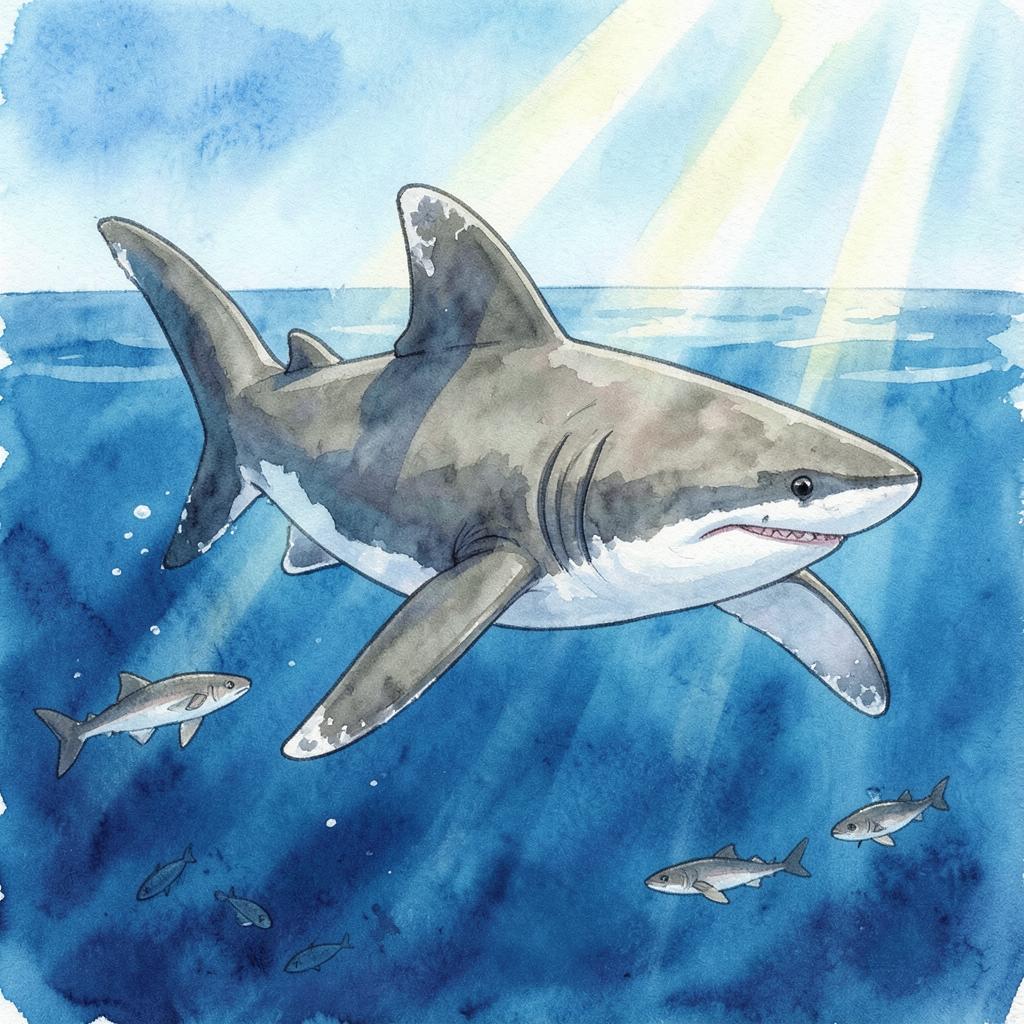
Illustrated Species Ambassador
Longwing — Oceanic Whitetip Shark
I'm Longwing, an illustrated ambassador for the oceanic whitetip shark. I live far offshore, where food is scarce and I must cover great distances to find it.
- One fact worth knowing
- Once among the most abundant large animals on earth, the oceanic whitetip has declined by an estimated 95 percent or more, mostly as fishery bycatch driven by the fin trade.
- What I depend on
- I depend on warm open-ocean surface waters and on prey scattered across the high seas — and on not encountering longline and purse seine gear.
- My greatest threat
- My greatest threats are bycatch in longline and purse seine fisheries and the fin trade.
- One way you can help
- Avoid shark fin products entirely, choose tuna from pole-and-line or FAD-free fisheries certified for low bycatch, and support electronic monitoring on fishing fleets.
This ambassador is an original illustration created for this project. It is an educational character, not a documentary image, and its statements follow the sourced record on this page. Artwork and rights record
Why this species matters
This shark went from arguably the most abundant large animal on the planet to critically endangered within living memory, in the open ocean where nobody was watching. It is the strongest reminder that abundance and remoteness are not protection.
If it disappears: The open ocean would lose one of its few apex predators, with poorly understood consequences for a food web that is difficult to study and even harder to restore.
Conservation status
- IUCN Red List
- Critically EndangeredLast verified 2026-09-08
- U.S. Endangered Species Act
- ThreatenedListed 2018.Last verified 2026-09-08
- CITES
- Appendix IIListed in 2013.Last verified 2026-09-08
- Regional fisheries bodies
- Retention prohibited by most tuna regional fisheries management organizationsLast verified 2026-09-08
Population
No global count exists. Regional analyses indicate declines exceeding 80 to 95 percent from historic baselines, with some ocean basins showing near-complete loss from catch records.
Trend: Decreasing
As reported: IUCN Red List assessment and regional fisheries stock analyses
Source: IUCN Red List; NOAA Fisheries; regional fisheries management organizations
Uncertainty: Trends are inferred from fishery catch rates rather than direct surveys. Catch-rate declines can overstate or understate real change and should be described as estimates.
Historical: Described in the mid-twentieth century as possibly the most abundant large animal on earth over about 100 pounds; it was routinely encountered in the open ocean.
Fragmentation: A wide-ranging oceanic species, but now rare enough that encounters are uncommon in much of its range.
Range and distribution
Historic range: Tropical and subtropical open ocean worldwide, generally in waters above 20°C.
Current range: Same global range, at drastically reduced abundance; some populations, such as around the Bahamas, remain comparatively intact.
Range contraction: Functionally rare across most of its former range.
Regions occupied
- Tropical Atlantic
- Indian Ocean
- Tropical Pacific
- Bahamas (a relative stronghold)
Habitat
Primary habitat: Open ocean surface waters, usually far from land and above the continental shelf edge.
Breeding habitat: Gives birth to live young in open water.
Feeding habitat: Feeds on bony fish, squid, seabirds, and carrion, patrolling the surface layer.
Habitat dependencies
- Open-ocean prey availability
- Freedom from longline and purse seine gear
- Warm surface waters
Biology and ecology
An apex predator and scavenger in the open ocean, an environment with few large predators and limited food.
Important adaptations: Very long, rounded, white-tipped pectoral fins that allow efficient gliding over vast distances in food-poor open water — the same fins that made it the most sought-after species in the fin trade.
- Size
- Up to about 11 feet, commonly smaller.
- Weight
- Up to roughly 370 pounds.
- Lifespan
- Estimated 20 years or more.
- Diet
- Bony fish, squid, seabirds, sea turtles, and carrion.
- Reproduction
- Viviparous — gives birth to live young after roughly a year of gestation.
- Offspring
- Typically 1 to 15 pups.
- Breeding frequency
- Roughly every two years.
- Age at maturity
- Around four to seven years.
Primary threats
Bycatch
Caught incidentally in tuna and swordfish longline and purse seine fisheries throughout the tropics; this is the dominant source of mortality.
Wildlife trafficking
Its large fins are among the most valuable in the shark fin trade, creating an incentive to retain sharks despite prohibitions.
Slow reproduction
Late maturity and small litters mean populations cannot rebound quickly from heavy fishing.
Enforcement gaps
Retention bans exist but at-sea monitoring and observer coverage remain limited in many fleets.
Post-release mortality
Sharks released alive from gear often die afterward from stress and injury.
Climate change
Shifting ocean temperature and productivity alter prey distribution and overlap with fisheries.
Conservation and recovery
Programs and efforts
- Retention prohibitions adopted by most tuna regional fisheries management organizations
- CITES Appendix II trade regulation requiring legality and sustainability findings
- Observer programs and electronic monitoring on longline vessels
- Circle hook and gear modification research to reduce shark capture
- Bahamas shark sanctuary protecting one of the healthier remaining populations
Protected areas
- Bahamas shark sanctuary
- Various national shark sanctuaries in the Pacific and Caribbean
Legal protections
- Endangered Species Act
- CITES Appendix II
- Regional fisheries retention bans
- National shark finning prohibitions
Measurable progress
- The Bahamas population remains relatively healthy under sanctuary protection
- CITES listing has increased traceability requirements in the fin trade
Continuing challenges
- Bycatch reduction requires changing global tuna fishing practice
- Observer coverage is low in many fleets
- The species crosses many national jurisdictions
How people can help
What individuals can do
- Avoid shark fin products entirely
- Choose tuna certified for low bycatch and pole-and-line or FAD-free fisheries
- Support electronic monitoring requirements on fishing fleets
What communities can do
- Support national and state shark fin trade bans
- Back sustainable seafood procurement in institutions
Educational actions
- Use this species to teach that bycatch, not targeted hunting, drives most marine declines
Habitat support
- Support high seas marine protected areas and the international high seas biodiversity treaty
Organizations and programs to learn about
- NOAA Fisheries
- IUCN SSC Shark Specialist Group
- TRAFFIC
- regional fisheries management organizations
Educational notes
- Described in the mid-twentieth century as possibly the most abundant large animal on earth.
- The long white-tipped fins that make it efficient in open water are also what made it a fin-trade target.
Sources and references
- IUCN Red List — Carcharhinus longimanus — IUCN
- NOAA Fisheries — Oceanic Whitetip Shark — NOAA Fisheries
- CITES Appendices — CITES